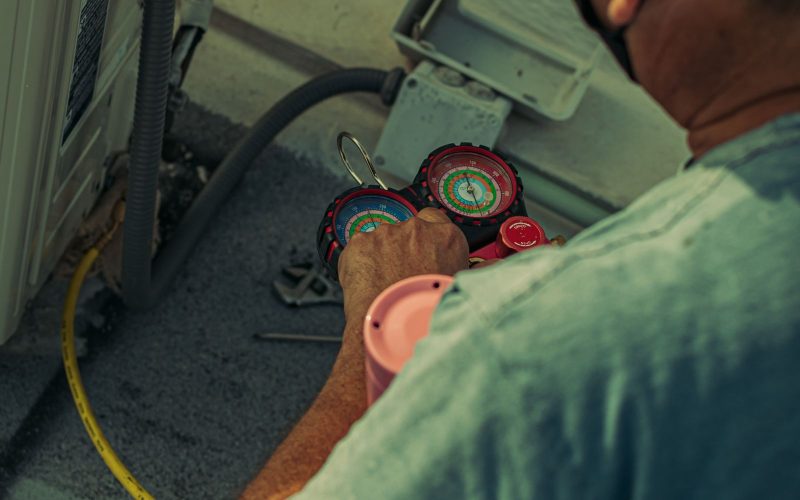
Heat Pump Keeps Tripping the Breaker? Causes, What’s Safe to Check, and Repair Costs
A heat pump that keeps tripping the breaker is telling you something. Here's how to reset it safely once, read when it trips, and match that to the likely cause and repair cost.

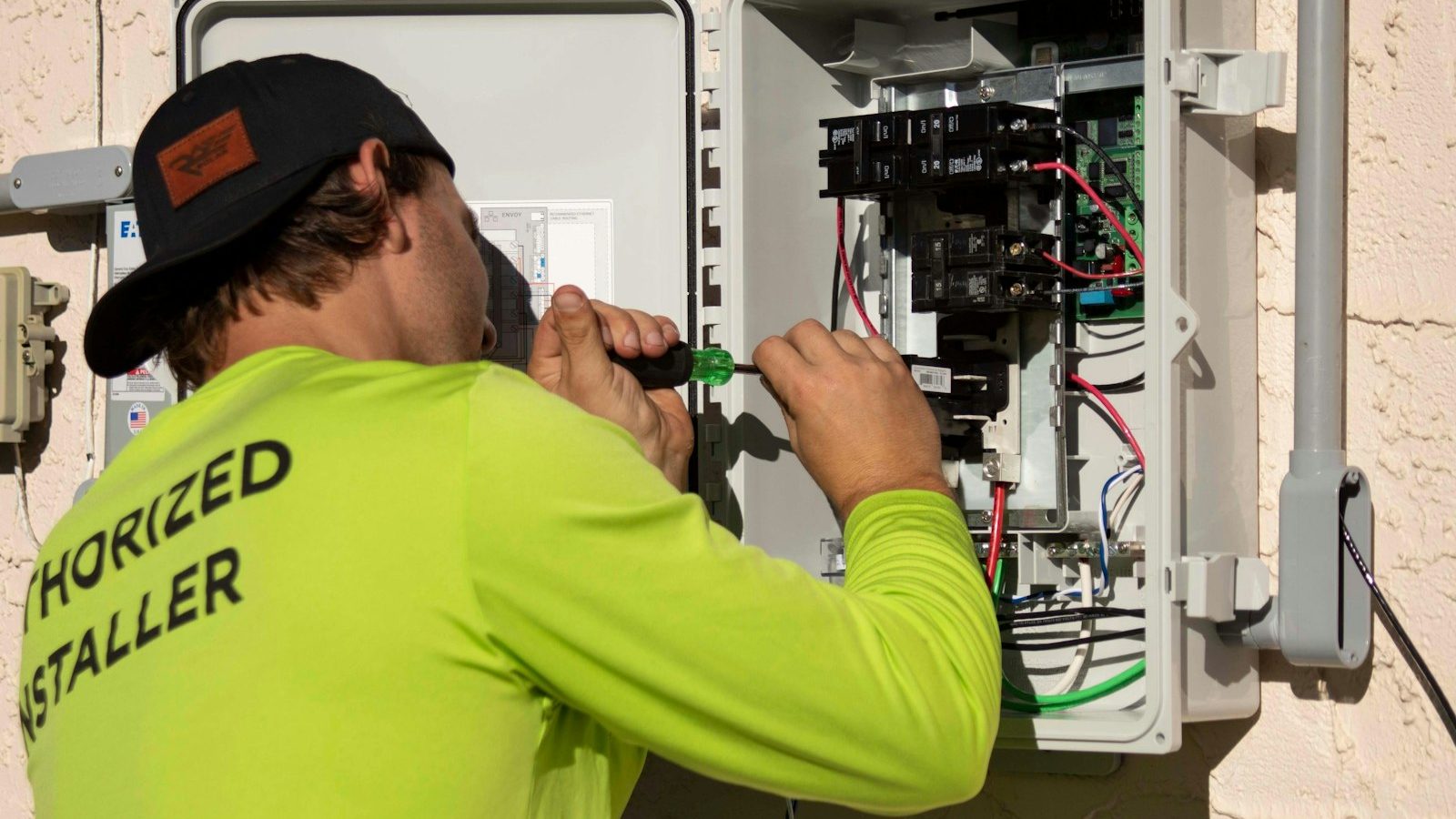
Reset it once. If it trips again, the breaker is doing its job.
A breaker that trips once in a storm can be a fluke. A heat pump that keeps tripping the same breaker is telling you something is drawing too much current or leaking it to ground. The most common causes are a failing capacitor, a compressor struggling to start, or backup heat stacking up with the heat pump during defrost. All of them are fixable, and resetting over and over isn’t the fix.
If your heat pump trips the breaker repeatedly, reset it once, fully off then on, and watch when it trips again. Tripping right at startup usually points to a capacitor or compressor. Tripping in cold weather often points to backup heat. Tripping at random often points to loose wiring, moisture or a worn breaker.
Don’t keep resetting it. Each reset forces a struggling motor or a damaged wire to try again, and that can turn a $200 repair into a $2,000 one. 💡
Few things are more frustrating on a cold night than a heat pump that runs for a few minutes, clicks off, and leaves you flipping a breaker in the basement with a flashlight. It’s tempting to keep resetting it and hope it sorts itself out.
Resist that. A circuit breaker has one job: to cut power before too much current overheats the wiring. When it trips, something asked for more current than the circuit is designed to carry, or current found a path to ground it shouldn’t have. The breaker is the messenger. This guide helps you read the message, figure out which part is likely at fault, and decide what’s safe to check yourself before you call someone.
What’s in this guide
- First: reset it safely, once
- Which breaker tripped?
- When it trips tells you most
- Trips at startup: capacitor and compressor
- Trips in cold weather: backup heat and defrost
- Trips at random: wiring, moisture and the breaker itself
- The GFCI twist on newer installs
- What each repair typically costs
- 6 mistakes that turn a small fix into a big one
- Frequently asked questions
- Your final checklist
Alt text: “Tripped double-pole breaker labeled heat pump in a residential electrical panel”
First: reset it safely, once
Before you reset anything, take ten seconds to look and sniff. If you see scorch marks on the panel, smell burning plastic, hear buzzing from the panel or feel that the breaker is hot, don’t reset it. Call an electrician or HVAC technician.
If everything looks normal, here’s how to reset it properly:
Turn the thermostat off
That way the system doesn’t try to start the instant power comes back.
Find the tripped breaker
A tripped breaker usually sits in the middle, between ON and OFF. It may not look obviously different, so look carefully along the row.
Push it fully OFF, then back ON
A tripped breaker won’t reset until it’s pushed all the way to OFF first. You should feel a firm click each way.
Wait about five minutes
Many heat pumps have a built-in delay before the compressor restarts. Waiting also lets pressures settle.
Turn the thermostat back on and watch
Stay near the outdoor unit if you can. Note whether it starts, how long it runs, and exactly when the breaker trips again.
If it trips again, stop. Every reset forces a failing motor, a stuck compressor or a damaged wire through another high-current start. That’s how a cheap capacitor failure turns into a burned-out compressor, or a loose connection turns into a fire.
Which breaker tripped?
A ducted heat pump system usually has more than one circuit, and which one tripped narrows things down right away.
- The outdoor unit breaker is usually a double-pole 240-volt breaker, often 20 to 50 amps depending on the system size. It powers the compressor and outdoor fan. Trips here point at the outdoor unit.
- The air handler or backup heat breaker powers the indoor blower and electric heat strips. Larger strip heaters can have two breakers of their own. Trips here point at the blower, the strips or their controls.
- The outdoor disconnect is the box on the wall near the outdoor unit. It may have its own fuses or a breaker. A blown fuse there can look exactly like a tripped panel breaker.
- A GFCI breaker has a small test button. Newer installations may have one on the outdoor unit circuit. More on why that matters below.
If your breakers are labeled “HVAC” or not at all, take a minute to work out which is which and write it down clearly. The next time something trips, you’ll know instantly whether it’s the outdoor unit, the air handler or the heat strips, and so will your technician.
Ductless mini-splits are simpler. Usually one circuit feeds the outdoor unit, and the indoor heads are powered from it. If you’re curious how your system’s circuits should be sized, our guide to heat pump electrical requirements explains the numbers on the nameplate.
When it trips tells you most
Technicians love a homeowner who can say exactly when the trip happens. It’s the single most useful clue you can give them.
| When it trips | Most likely causes | DIY check first? |
|---|---|---|
| The instant the outdoor unit tries to start | Failed capacitor, compressor struggling to start, shorted compressor | Only listen and look; call a pro |
| After running 5–30 minutes | Overheating motor, dirty coil or filter, failing fan motor, loose connection heating up | Check filter and outdoor coil |
| Only in cold weather or during defrost | Backup heat strips stacking with the heat pump, shorted strip element, wrong breaker size | Note outdoor temperature |
| Only when it’s raining or after snow melt | Moisture in the disconnect, wiring or outdoor unit | Look for water in the disconnect box (don’t open live panels) |
| At random, no pattern | Loose or corroded connections, worn breaker, chafed wire | Call a pro |
| Right after a new install | GFCI nuisance trip, wrong breaker type or size, wiring error | Call the installer |
Trips at startup: capacitor and compressor
This is the most common pattern, and it usually involves the parts that help the outdoor unit get moving.
A failing capacitor. Your outdoor unit has at least one capacitor, a small cylinder that gives the compressor and fan motor a jolt of energy to start and keeps them running smoothly. Capacitors wear out, especially after years of summer heat. When one weakens, the motor struggles to start and pulls much more current while it tries. That surge can trip the breaker. Signs include a hum or buzz from the outdoor unit, a fan that doesn’t spin or spins slowly, or a click followed by silence. A capacitor is one of the cheapest and most common heat pump repairs, but it stores a dangerous charge even with the power off, so it’s a job for a technician.
A compressor that struggles to start. As compressors age, they can become harder to start, especially after sitting idle or in hot weather. The motor pulls a big current spike, sometimes called locked-rotor current, while it tries to turn over. A technician may recommend a hard start kit, a small add-on that gives the compressor an extra kick at startup. On an older system, it can buy you time. On a newer one, it’s worth asking why the compressor is struggling in the first place.
A shorted or grounded compressor. If the compressor’s internal windings have failed and short to ground, the breaker will trip immediately, every time. This is the one nobody wants. A technician can test the windings to confirm it. On an older system, a failed compressor often turns into a repair-or-replace decision. Our guide to heat pump costs in 2026 helps with the replacement side of that math.
Stand near the outdoor unit when it tries to start. A loud hum with no fan movement, a click followed by silence, or a buzz that stops the moment the breaker trips are all worth describing to the technician. They narrow the diagnosis fast.
A $10 part in a $200 repair can protect a $3,000 compressor, but only if you stop resetting the breaker long enough to get it replaced.
— Why one reset is the rule
Trips in cold weather: backup heat and defrost
If your breaker only trips on cold days, the backup heat is the first place to look.
Most ducted heat pumps have electric heat strips in the air handler. They’re powerful. A 10-kilowatt strip heater pulls about 40 amps at 240 volts on its own. They come on when the heat pump needs help, when you select emergency heat, and on many systems during defrost. In defrost, the heat pump briefly reverses to melt ice off the outdoor coil, and the strips come on so you don’t get cold air indoors.
That’s where problems can stack up:
- A shorted heat strip element or failing sequencer (the part that brings strips on in stages) can trip its breaker every time the strips energize.
- Strips that all come on at once instead of in stages can create a bigger surge than the circuit was designed for.
- A breaker or wire size that doesn’t match the strip heater can trip under normal backup heat load. That can happen after a strip heater is upgraded without rechecking the circuit.
A tip for the diagnosis: note whether the trip happens when the “aux” or “em heat” indicator comes on at your thermostat, and whether you can see steam from the outdoor unit during defrost. Both are strong clues. Our explainer on emergency heat vs. auxiliary heat explains what those thermostat lights mean.
Most ductless systems have no electric strip heat, so cold-weather trips on a mini-split point more toward the outdoor unit itself, a base pan heater if one is fitted, or the circuit.
If the strips are the problem, emergency heat makes it worse. And if the breaker that’s tripping feeds the strips, you’re relying on the one part that’s failing. Keep the house safe with portable heat if you have to, and call for service.
Trips at random: wiring, moisture and the breaker itself
Random trips with no clear pattern are often the hardest to diagnose, and they usually come down to one of these:
Loose or corroded connections. Wires at the disconnect, contactor, capacitor or panel can loosen over time as they heat and cool. A loose connection heats up, adds resistance and can cause a trip. You may notice scorching or discoloration at terminals, but that’s a job for a technician or electrician to inspect.
Chafed or damaged wiring. Vibration from the outdoor unit can rub a wire against sheet metal until the insulation wears through. Rodents chewing on wires can do the same. The result is a short to ground that can trip the breaker at unpredictable moments.
Moisture. Water getting into the outdoor disconnect, a junction box or a damaged conduit can cause trips that only happen in rain or during snow melt. It’s also a genuine shock hazard.
If you suspect water in the outdoor disconnect or a junction box, don’t open it or touch it with wet hands. Turn the breaker off at the panel and let a technician or electrician inspect it. A disconnect that takes on water usually needs a better cover or a replacement box, not just drying out.
A worn-out breaker. Breakers are mechanical, and they don’t last forever. An old breaker can trip below its rated current. If everything else checks out, an electrician can test and replace it. It’s a relatively cheap fix, but only once you’ve ruled out the equipment.
Dirty filters and coils. A badly clogged filter or a dirty outdoor coil makes the system work harder, raising pressures and motor current. That doesn’t usually trip a breaker on its own, but it can push a marginal circuit or an aging motor over the edge. It’s also the one thing on this list you can safely fix yourself. See our maintenance checklist for how.
Alt text: “Technician measuring heat pump current draw with a clamp meter to diagnose breaker trips”
The GFCI twist on newer installs
If your heat pump was installed recently and started tripping right away, the problem may not be the heat pump at all.
The National Electrical Code now requires ground-fault protection, known as GFCI, for outdoor HVAC equipment in jurisdictions that have adopted recent code editions. The catch is that inverter-driven heat pumps, which include most modern variable-speed and mini-split units, leak a tiny amount of current to ground as a normal part of how their electronics work. An ordinary GFCI breaker can read that as a fault and trip for no real reason.
The fix isn’t to remove protection. It’s to use a device designed to work with inverter equipment. Our electrical requirements guide covers the 2026 GFCI change and the device types that avoid nuisance trips. If this sounds like your situation, call your installer. It’s their job to make the circuit work with the equipment they installed.
What each repair typically costs
These are typical installed ranges from contractor pricing surveys and published guides. Your price will depend on your region, the brand and whether parts are in stock.
| Repair | Typical cost | What it fixes |
|---|---|---|
| Diagnostic service call | $100–$250 | Finding the cause |
| Run or start capacitor replacement | $150–$400 | Hard starts, humming, trips at startup |
| Contactor replacement | $150–$400 | Chattering, pitted contacts, erratic starts |
| Hard start kit | $150–$400 | An aging compressor that struggles to start |
| Tightening or repairing wiring connections | $150–$500 | Loose, corroded or chafed wires |
| Breaker replacement by an electrician | $150–$350 | A worn breaker tripping below its rating |
| Heat strip element or sequencer | $200–$600 | Trips when backup heat comes on |
| Outdoor fan motor replacement | $400–$900 | An overheating or seized fan motor |
| Compressor replacement | $1,500–$4,500+ | A shorted or seized compressor; often a replace-the-system decision |
If your system is still under warranty, ask whether the part is covered. Parts are often covered for years if the system was registered, though labor often isn’t. Our guide to heat pump warranties explains what’s usually covered and how to make a claim.
6 mistakes that turn a small fix into a big one
❌ Mistake 1: Resetting the breaker again and again
It feels harmless. It forces a failing part through another high-current start every time.
❌ Mistake 2: Swapping in a bigger breaker
A bigger breaker lets more current flow through wiring that wasn’t sized for it. That’s how wires overheat.
❌ Mistake 3: Replacing the capacitor yourself
Capacitors are cheap online and videos make it look easy. They can hold a dangerous charge even with the power off.
❌ Mistake 4: Not noticing which breaker tripped
“The heat pump breaker” could be one of three, and each points to a different part of the system.
❌ Mistake 5: Ignoring a dirty filter or outdoor coil
Restricted airflow makes motors and compressors work harder and run hotter.
❌ Mistake 6: Removing GFCI protection to stop nuisance trips
It stops the tripping, but it also removes protection that code now requires.
Frequently asked questions
Why does my heat pump keep tripping the breaker?
The most common causes are a failing capacitor, a compressor that struggles to start, backup heat strips stacking with the heat pump in cold weather or defrost, loose or damaged wiring, moisture, or a worn breaker. When the trip happens, whether at startup, after running, only in the cold or at random, is the best clue to which one it is.
Is it safe to keep resetting the breaker?
No. Reset it once, properly. If it trips again, stop. Repeated resets force a failing motor or damaged wire to try again and can turn a small repair into a compressor replacement, or create a fire risk.
Can a bad capacitor trip a breaker?
Yes. A weak capacitor makes the compressor or fan motor struggle to start, and the motor pulls much more current while it struggles. That surge can trip the breaker. A capacitor is one of the cheaper heat pump repairs, but replacing one is a job for a technician.
Why does my heat pump only trip the breaker in winter?
Cold-weather trips often involve the backup heat strips, which come on when the heat pump needs help and during defrost. A shorted strip element, a failing sequencer or a circuit that doesn’t match the strip heater’s load can trip the breaker when the strips energize.
My new heat pump keeps tripping a GFCI. Is it defective?
Probably not. Inverter heat pumps leak a small amount of current to ground by design, and ordinary GFCI devices can mistake that for a fault. Your installer should fit a protection device that works with inverter equipment rather than removing protection.
Should I replace the breaker myself?
Working inside an electrical panel is dangerous and in many places requires a licensed electrician. A worn breaker is also usually the last thing to suspect, after the equipment has been checked. Have a professional test it before anything gets replaced.
Your final checklist
✅ Your breaker-trip checklist
- Look before you reset — no scorch marks, burning smell, buzzing or hot breaker
- Turn the thermostat off — then push the breaker fully OFF and back ON
- Wait five minutes — before turning the system back on
- Reset only once — if it trips again, stop
- Note which breaker — outdoor unit, air handler, heat strips or GFCI
- Note when it trips — at startup, after running, in the cold, in rain, or at random
- Check the thermostat — is “aux” or “em heat” showing when it trips?
- Change the filter — and gently clear debris from the outdoor coil with the power off
- Leave capacitors, compressors and panels to pros — they hold dangerous energy
- Never upsize the breaker — it must match the nameplate and the wire
- New install tripping? — call the installer about GFCI compatibility
- Check your warranty — parts may be covered if the system was registered
If the heat pump isn’t tripping anything but still isn’t keeping you warm, our heat pump not heating guide walks through the other common causes. If you’re facing a compressor replacement on an older system, our best heat pumps of 2026 is a good place to start comparing.
Sources

Heat Pump Reviews Editorial Team
Our editors research heat pumps full time: manufacturer specifications, AHRI and ENERGY STAR listings, published cold-climate performance data, warranty terms, installer feedback and owner reviews. We do not accept payment for placement, and every rating follows our published methodology.