Mitsubishi Hyper-Heating (H2i) Heat Pump Review: The Cold-Climate Benchmark
Mitsubishi's H2i and H2i plus systems hold full heating capacity at 5°F and keep running to about -13°F. The best cold-climate heat pump you can buy, at a price that reflects it.

Editor’s verdict: The most dependable cold-climate heat pump platform sold in the U.S., provided you buy it through a Diamond Contractor and accept a premium price.
Mitsubishi Electric’s Hyper-Heating INVERTER line — badged H2i and, on newer equipment, H2i plus — is the system most cold-climate heat pump shortlists start with. It holds 100% of its rated heating capacity down to 5°F and keeps running to roughly -13°F, which is well past the point where a conventional heat pump has handed the job over to backup heat. The trade-off is price: Mitsubishi is a premium, contractor-only brand, and quotes land near the top of the market.
This review is based on manufacturer specifications, AHRI and ENERGY STAR listings, NEEP cold-climate data and published owner feedback. We have not installed or bench-tested the equipment.
Overview
Hyper-Heating is not a single product. It is a compressor and control strategy that Mitsubishi applies across several families, and the family you choose matters more than the badge.
| Family | What it is | Typical use |
|---|---|---|
| MSZ-FS (M-Series wall unit) | Single-zone ductless wall head with an H2i plus outdoor unit | One room, an addition, a finished basement |
| MXZ multi-zone | One outdoor unit serving 2–8 indoor heads or ducted cassettes | Whole-home ductless retrofits |
| SVZ / PVA air handlers | Multi-position ducted air handlers that use existing ductwork | Furnace replacement in a ducted house |
| intelli-HEAT | Heat pump plus coil bolted onto an existing gas furnace | Dual-fuel retrofit, phased electrification |
The important structural point: with Mitsubishi you are not forced to choose between ducted and ductless. A single MXZ outdoor unit can feed a wall head in a bedroom and a small ducted cassette over a hallway, which is why the brand dominates awkward retrofits. If you are still deciding between approaches, our guide to ducted vs ductless heat pumps walks through the layout questions first.
All of it is sold through Mitsubishi’s dealer network rather than at retail. There is no legitimate DIY path here, and the warranty depends on who installs it.
Efficiency
Efficiency varies enormously across the line, and this is where marketing numbers mislead people. The small single-zone systems post the headline ratings; multi-zone and ducted systems do not.
Manufacturer ratings for representative MSZ-FS single-zone systems:
- 9,000 BTU/h: up to roughly 29.8 SEER2, 10.9 HSPF2
- 15,000 BTU/h: up to roughly 22.3 SEER2, 10.4 HSPF2
- 18,000 BTU/h: up to roughly 21.0 SEER2, 10.7 HSPF2
Multi-zone MXZ systems generally land in the mid-to-high teens SEER2, because one compressor modulating for several rooms cannot sit in its efficiency sweet spot as often. Ducted SVZ and PVA combinations are lower again — commonly 15–18 SEER2 depending on the matched pairing. That is not a defect; it is the physics of sharing a compressor and pushing air through duct static pressure. But it does mean a “Mitsubishi Hyper-Heat” quote can describe a 29 SEER2 system or an 16 SEER2 system, and you should ask which AHRI-matched combination you are actually buying.
HSPF2 across the Hyper-Heating range is consistently strong — usually 9.5 to 11 — which is the number that matters most if heating dominates your bills. If those acronyms are unfamiliar, see SEER2, HSPF2 and COP explained.
Heating performance
This is the reason the brand exists in its current form. Hyper-Heating uses a flash-injection compressor circuit that keeps refrigerant mass flow up as outdoor temperatures fall, so the system does not simply fade the way a single-stage unit does.
The documented claims: 100% of rated heating capacity at 5°F, and continued heating operation down to roughly -13°F. H2i plus models push the full-capacity point further down the curve on some sizes, and Mitsubishi’s intelli-HEAT dual-fuel package is specified for all-electric heating down to about -11°F before the gas furnace takes over.
What that means in practice is that a properly sized Mitsubishi system in Minneapolis or Burlington rarely calls for electric resistance backup. Many NEEP-listed Mitsubishi models still return a COP near or above 2.0 at 5°F, meaning roughly two units of heat per unit of electricity in genuinely cold weather.
Cold-climate capability is only realized if the system is sized for your design temperature, not for a cooling load. Undersizing is the single most common reason a Hyper-Heating install disappoints in January. Insist on a Manual J calculation — our heat pump sizing guide explains what to ask for.
Cooling performance
Cooling is competent rather than headline-grabbing, which is the correct priority for a cold-climate product. The inverter compressor modulates continuously, so instead of the on-off cycling of a single-stage system you get long, low-speed runs that hold temperature within a degree and pull far more moisture out of the air.
Ductless heads have a limitation worth knowing: they condition the room they are mounted in, not the room down the hall. Open-plan homes handle this fine; homes with a lot of closed doors and long corridors will need more heads than the salesperson’s first sketch shows, or a ducted cassette to cover a bedroom wing.
Noise
Sound is a genuine strength. MSZ-FS indoor heads run as low as the high teens in dB(A) on their lowest fan speed — quiet enough that people frequently cannot tell whether the unit is on. Outdoor units are typically in the high 40s to high 50s dB(A) depending on size and speed, which is competitive but not class-leading against the quietest ducted systems.
One caveat that owner feedback surfaces repeatedly: defrost cycles on any cold-climate heat pump produce a noticeable whoosh and sometimes steam, and Hyper-Heating units defrost more often than a mild-climate system simply because they keep working in conditions that produce frost. Our explainer on heat pump noise covers which sounds are normal and which signal a problem.
Features and controls
Mitsubishi’s control ecosystem is mature. Kumo Cloud handles app and voice control, scheduling and multi-zone coordination, and the wired MHK2 thermostat is the better choice for anyone who wants a wall control rather than a handset. i-see sensor models scan the room and bias airflow toward or away from occupants.
The intelli-HEAT package deserves a specific mention because it solves a real problem. It pairs a heat pump and coil with an existing gas furnace and uses a selectable balance point, so the system can be told to switch to gas on cost grounds or on emissions grounds. For a homeowner who is not ready to remove a working furnace, it is the least disruptive way to get most of the annual savings. Capacities run roughly 18,000 to 42,000 BTU/h in vertical, horizontal and downflow configurations.
Not sure which model fits your home? Start with our ranked picks for 2026.
Compare This ModelWarranty and reliability
Mitsubishi’s warranty is tiered by installer, and the difference is large. A system installed and registered by a Diamond Contractor carries 12 years on parts and the compressor. Installed by a non-Diamond contractor, coverage drops to the standard limited terms — commonly 5 years parts and 7 years compressor. Labor is not covered in either case unless your contractor sells a separate labor plan.
That is unusually installer-dependent, and it is the single most consequential question to ask before signing. Ask for the contractor’s Diamond status in writing.
Reliability reputation is strong. The equipment has a long track record in Japanese and European markets, parts availability in the U.S. is good, and the common failure reports cluster around installation faults — poor flare connections leaking refrigerant, undersized line sets, condensate drainage — rather than component defects.
Price and value
Typical installed prices in 2026, before incentives:
- Single-zone ductless (one head): roughly $5,500–$9,500
- Two- to three-zone multi-split: roughly $10,000–$18,000
- Four-plus zones or ducted SVZ/PVA whole-home: roughly $15,000–$28,000
- intelli-HEAT dual-fuel add-on to an existing furnace: roughly $9,000–$16,000
Mitsubishi commands a premium of roughly 15–30% over mainstream ducted brands for comparable capacity. You are paying for cold-weather output and installer network quality, not for cooling efficiency you could buy cheaper elsewhere. Run your own numbers with the heat pump cost calculator before you take a quote at face value.
On incentives: the federal 25C tax credit that covered 30% of a heat pump install up to $2,000 was terminated for property placed in service after December 31, 2025, so do not budget for it on a 2026 job. State and utility programs are now the meaningful money — Mass Save, NYSERDA, TECH Clean California and HEAR-funded state rebates all still list Mitsubishi cold-climate models. Verify current status before you sign; see what replaced the federal credit.
One 2026 cost factor applies to the whole industry: new equipment ships with A2L refrigerants. Mitsubishi’s 2025-and-later outdoor units are moving to R-454B, and the supply squeeze on R-454B through 2025 pushed both prices and lead times up. Ask your contractor which refrigerant your specific outdoor unit uses, because transitional stock of R-410A equipment is still in circulation.
Who should buy it
Mitsubishi Hyper-Heating makes the most sense if you check at least two of these boxes: you live in climate zone 5 or colder; your house has no usable ductwork, or has ductwork only in part of the house; you want room-by-room temperature control; or you are electrifying a home with expensive fuel (propane, oil, resistance electric) where the operating-cost savings justify a higher install price.
It makes less sense if you are in a mild climate with good ductwork and a cooling-dominated load. There, a well-matched ducted inverter system delivers similar comfort for meaningfully less money.
Alternatives
Fujitsu Halcyon XLTH is the closest direct competitor — comparable low-temperature output, a similar ducted-and-ductless product structure, and typically a slightly lower quote. If your local Fujitsu dealer is stronger than your local Diamond Contractor, take the Fujitsu.
Daikin FIT is the better answer for a ducted house that wants an inverter system without Mitsubishi money. It gives up cold-weather headroom but adds a 12-year registered warranty and a compact side-discharge cabinet. Our Mitsubishi vs Daikin comparison puts the two side by side.
Bosch IDS 2.0 is the value play for ducted homes that still need real cold-weather performance, particularly in the IDS Ultra configuration.
Our recommendation
If you heat in a cold climate and your house does not have ducts everywhere, Mitsubishi Hyper-Heating is the safest choice on the market and the one we would put on our own house. Buy it for the heating curve, not the SEER2 number, and treat Diamond Contractor status as a requirement rather than a nice-to-have — the 12-year warranty and the installation quality both hang on it.
If your house is fully ducted and your winters bottom out around 15°F, you are paying for capability you will not use. Spend the difference on a better-sized ducted system and put the savings into air sealing.
Not sure which model fits your home? Start with our ranked picks for 2026.
Find the Best Heat Pump for Your HomePros and cons
What we like
- Holds 100% of rated heating capacity at 5°F and keeps heating to roughly -13°F
- Single-zone ratings reach about 29.8 SEER2 and 10.9 HSPF2 on the smallest sizes
- One outdoor unit can serve ductless heads and ducted cassettes together
- Indoor heads are exceptionally quiet, down to the high teens dB(A)
- 12-year parts and compressor warranty with a registered Diamond Contractor install
- intelli-HEAT offers a low-disruption dual-fuel path for homes keeping a gas furnace
What to watch
- Installed prices run roughly 15–30% above mainstream ducted brands
- Warranty drops to about 5 years parts / 7 years compressor without a Diamond Contractor
- Multi-zone and ducted configurations rate far below the headline single-zone SEER2 numbers
- Contractor-only distribution; no legitimate DIY path
Key specifications
| Heating capacity | 6,000–48,000 BTU/h single-zone; multi-zone outdoor units to about 48,000 BTU/h |
|---|---|
| SEER2 | up to about 29.8 (9,000 BTU/h single-zone); mid-to-high teens for multi-zone and ducted |
| HSPF2 | up to about 10.9 |
| COP at 5°F | ≈2.0 on many NEEP-listed models |
| Rated heating at 5°F | 100% of rated capacity |
| Min. operating temp | about -13°F (heating) |
| Noise (outdoor) | roughly 49–58 dB(A) depending on size and speed |
| Noise (indoor) | as low as the high teens dB(A) on MSZ-FS heads |
| Refrigerant | R-454B on 2025+ units; transitional R-410A stock still in circulation |
| Warranty | 12 yr parts and compressor with registered Diamond Contractor install; otherwise about 5 yr parts / 7 yr compressor |
| Typical installed price | $5,500–$9,500 single zone; $10,000–$18,000 two to three zones; $15,000–$28,000 whole-home ducted or 4+ zones (2026, before incentives) |
Ratings vary by capacity and matched indoor unit. Confirm the exact AHRI-matched combination your contractor quotes.
Alternatives worth comparing
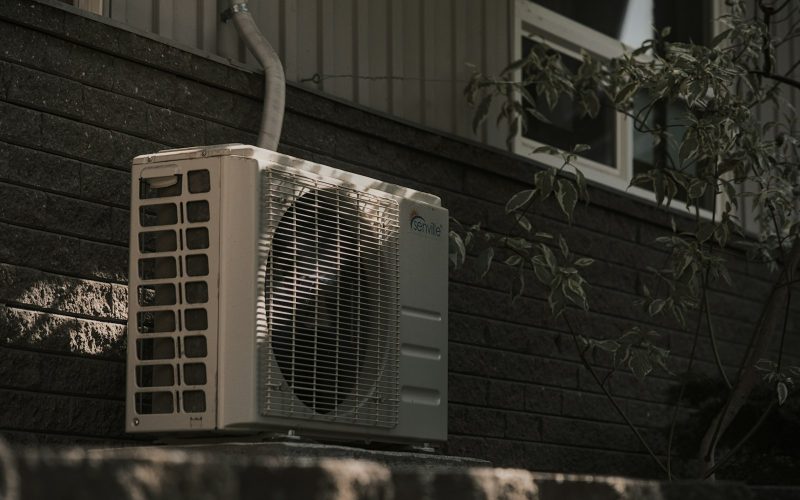
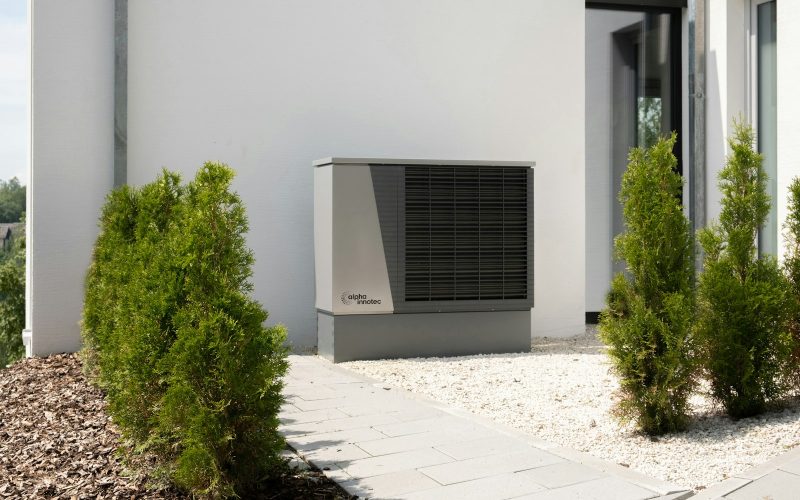
Halcyon / Airstage XLTH series (RLS3H, RLXFWH, RLFFH, RLXFZH)
Best for: Cold-climate homes without ductwork that want heat pump heating without fossil backup
The most credible alternative to Mitsubishi Hyper-Heating, with documented full capacity at 3°F and slim-duct options that hide the hardware.
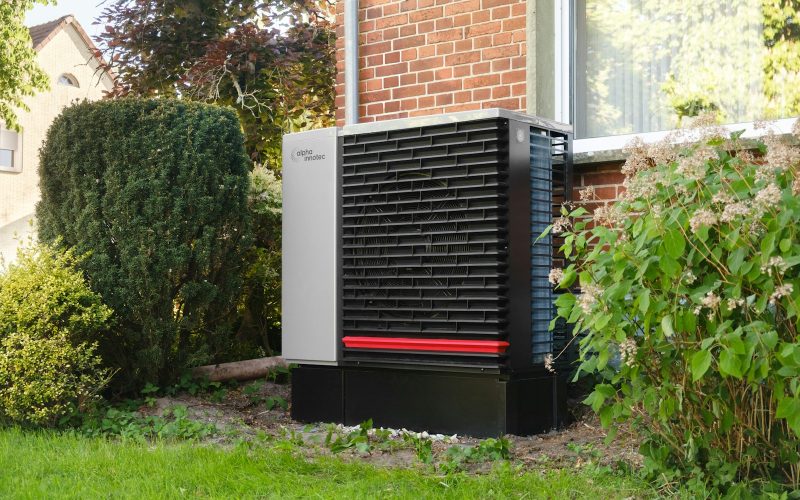
Daikin FIT (DZ17VSA / DH7VS series)
Best for: Ducted homes in mild to moderate climates with limited outdoor space
The best-value inverter heat pump for a ducted house with a tight place to put the outdoor unit, backed by the strongest…
IDS 2.0 / IDS Premium Connected (BOVA series); IDS Ultra cold-climate variant
Best for: Ducted homes wanting quiet inverter comfort without flagship pricing
The best value in ducted inverter heat pumps: flagship-class comfort and quiet for mid-tier money, provided you can find an experienced dealer.
Frequently asked questions
Mitsubishi rates H2i and H2i plus systems for continued heating operation down to roughly -13°F outdoor temperature, and for 100% of rated heating capacity at 5°F. Below about -13°F the system stops and backup heat takes over. Real-world output at the extremes depends on correct sizing, so ask your contractor for the capacity table at your design temperature rather than relying on the headline figure.
H2i is Mitsubishi's original Hyper-Heating INVERTER platform. H2i plus is the newer generation applied to current M-Series and MXZ equipment, which extends the full-capacity range further down the temperature curve on several models and pairs with the R-454B refrigerant transition. Both share the same flash-injection compressor principle; H2i plus simply holds output better in the coldest conditions.
Not legally, but the warranty depends on it. A system installed and registered by a Mitsubishi Diamond Contractor carries 12 years on parts and the compressor. A non-Diamond installation typically falls back to the standard limited terms of about 5 years parts and 7 years compressor. Neither tier includes labor unless your contractor sells a separate labor plan.
It depends on your climate and your ductwork. In climate zone 5 and colder, or in a home with no usable ducts, the cold-weather output and zoning flexibility usually justify the 15–30% premium. In a mild, fully ducted home with a cooling-dominated load, a mainstream inverter system delivers similar comfort for less money.
New Mitsubishi outdoor units are transitioning to R-454B, the A2L refrigerant replacing R-410A across the U.S. residential market. Some transitional R-410A stock is still in distribution, so confirm the refrigerant on the specific model number in your quote. R-454B supply was tight through 2025, which pushed both equipment prices and lead times up.
Yes. The intelli-HEAT dual-fuel package pairs a Mitsubishi heat pump and coil with an existing furnace and uses a selectable balance point to decide when to switch. It is offered in roughly 18,000 to 42,000 BTU/h capacities in vertical, horizontal and downflow configurations, and provides all-electric heating down to about -11°F before the furnace takes over.
Sources

Heat Pump Reviews Editorial Team
Our editors research heat pumps full time: manufacturer specifications, AHRI and ENERGY STAR listings, published cold-climate performance data, warranty terms, installer feedback and owner reviews. We do not accept payment for placement, and every rating follows our published methodology.