Heat Pump Not Heating? 10 Causes, From Free Fixes to Service Calls
Heat pump air feels cool by design, so start by confirming it is actually broken. Then work down 10 causes in order, from the four free fixes to the repairs that need a licensed technician.

Start with the free checks, not the phone
Most “my heat pump stopped heating” calls trace back to four things a homeowner can fix in under ten minutes: a thermostat setting, a tripped breaker, a clogged filter, or a smothered outdoor unit. Work down the list in order and you’ll either fix it or know exactly what to tell the technician.
Before assuming your heat pump is broken, confirm it actually is: heat pump air comes out around 85°F to 95°F, which feels cool on your hand even when the system is working perfectly.
If the house genuinely isn’t getting warm, check the thermostat mode and fan setting, then the breaker and outdoor disconnect, then the filter, then whether leaves or snow are choking the outdoor unit. Those four are free. Everything past that — refrigerant, capacitors, contactors, reversing valves — belongs to a licensed technician. 💡
Here’s the part that catches almost everyone the first winter.
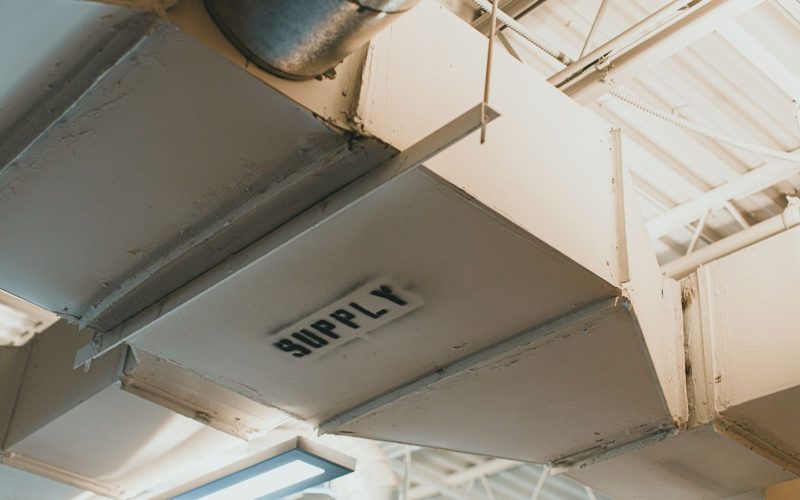
You put your hand over a supply register, the air feels lukewarm at best, and your gut says the thing is dead. It usually isn’t. A gas furnace dumps air into the ducts at roughly 120°F to 125°F, hot enough to feel like heat. A heat pump moves a much larger volume of gentler air, typically in the 90°F to 110°F range coming off the coil and often 85°F to 95°F by the time it reaches a register at the far end of a duct run. Your skin is about 91°F. So heat pump air can be warming your house and still feel cool on your palm.
That single fact explains a large share of “not heating” complaints. The rest are real, and this guide walks through them in the order a good technician would: cheapest and most likely first, expensive and rare last.
What’s in this guide
- First: is it actually broken?
- The 60-second triage table
- Causes 1–4: the free fixes
- Cause 5: it’s just in defrost
- Cause 6: frozen outdoor coil
- Cause 7: auxiliary heat isn’t engaging
- Cause 8: low refrigerant from a leak
- Causes 9–10: capacitor, contactor, reversing valve
- What each repair typically costs
- 6 mistakes that make things worse
- When to stop and call someone
- Frequently asked questions
- Your final checklist
Alt text: “Homeowner checking airflow at a supply register while a thermostat shows heat mode”
First: is it actually broken?
Run this test before anything else, because it costs nothing and settles the question.
Set the thermostat three degrees above room temperature so the system definitely calls for heat. Let it run for fifteen minutes straight. Then hold a simple cooking thermometer in the airflow at a supply register near the air handler, and take a second reading at a return grille. The difference between the two is your temperature rise.
A healthy air-source heat pump in mild weather usually shows a rise of about 20°F to 30°F over return air, landing somewhere near 85°F to 95°F at the register. In very cold weather that number drops, because the outdoor coil has less heat to harvest. That’s physics, not failure. If you’re seeing a genuine rise and the house is slowly gaining temperature, your system is working — it’s just working the way heat pumps work. Our explainer on how heat pumps work covers why the output changes with outdoor temperature.
Now the flip side. If the temperature rise is close to zero, or the supply air is colder than the room, or the house has been losing ground for hours, something is genuinely wrong. Keep reading.
If your thermostat fan is set to ON instead of AUTO, the blower runs nonstop — including the long stretches between heating cycles when it’s pushing room-temperature air. That air feels cold. Switch the fan to AUTO and the “cold blow” complaint usually disappears the same day.
A heat pump doesn’t make hot air. It makes a lot of warm air. Judge it by the room temperature at the end of the hour, not by how it feels on your hand.
— The single most useful reframe for a first-winter heat pump owner
The 60-second triage table
Find your symptom in the left column. This is the fastest route from “something’s wrong” to “here’s who fixes it.”
| Symptom | Most likely cause | DIY or pro | Typical cost |
|---|---|---|---|
| Air feels cool but house is slowly warming | Normal heat pump output; fan set to ON | DIY | $0 |
| Nothing runs at all — no fan, no outdoor unit | Tripped breaker, outdoor disconnect off, blown low-voltage fuse | DIY first, then pro | $0–$250 |
| Indoor fan runs, outdoor unit is dead silent | Failed capacitor or contactor; outdoor disconnect off | Pro | $120–$400 |
| Weak airflow from every register | Clogged air filter; blocked return | DIY | $5–$40 |
| Outdoor unit runs, blows steam, indoor air turns cool for a few minutes | Normal defrost cycle | DIY (nothing to do) | $0 |
| Outdoor coil is coated or encased in ice and never clears | Failed defrost board or sensor; drainage problem; low charge | Pro | $200–$650 |
| Heats fine in mild weather, can’t keep up when it’s cold | Auxiliary heat not engaging; undersized system | DIY check, then pro | $0–$500 |
| Runs constantly, poor heat, ice on the small copper line | Low refrigerant from a leak | Pro only | $200–$1,500+ |
| Blows cold air on purpose in heat mode, all the time | Stuck or failed reversing valve | Pro | $350–$800 |
| Outdoor unit hums but the fan won’t spin | Failed run capacitor | Pro | $120–$300 |
These are typical national ranges pulled from 2026 contractor cost guides. Published averages put most heat pump repairs between roughly $150 and $650, with a mid-point near $400. Your quote can land well outside that depending on labor rates, whether the part is under warranty, and how old the equipment is. Our 2026 heat pump cost guide covers replacement pricing.
Causes 1–4: the free fixes
Do these four in order. They cover the majority of no-heat calls, and none of them require a tool more complicated than a screwdriver.
Cause 1: The thermostat is in the wrong mode
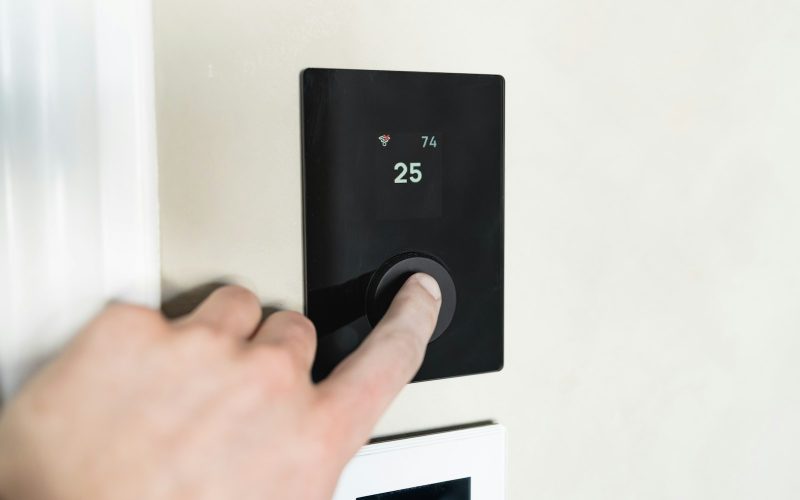
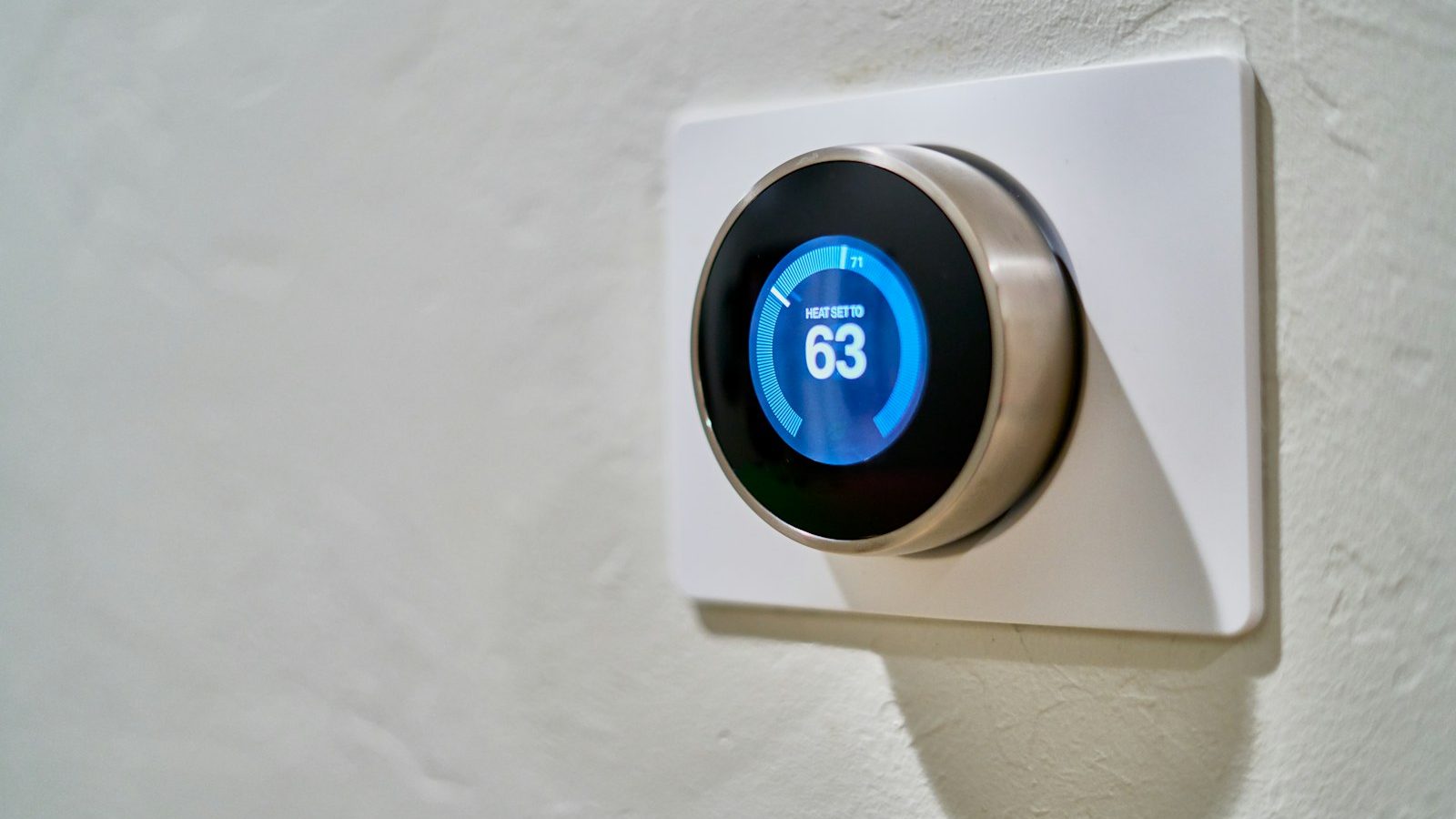
Confirm the mode is set to HEAT, not COOL, not OFF, not AUTO-changeover with a setpoint the system will never reach. Then confirm the fan is on AUTO, not ON. Then set the target at least three degrees above the current room reading so there’s a real call for heat. Also check that a schedule or a vacation hold isn’t overriding you — smart thermostats will happily sit at 62°F all day if someone set that up in July. Finally, if the thermostat screen is blank, replace the batteries.
Cause 2: A tripped breaker or an outdoor disconnect that’s off
A heat pump usually has two or three circuits: one for the outdoor unit, one for the air handler, and often a separate double-pole breaker for electric backup heat. Open the panel and look for a breaker sitting between ON and OFF, or one that feels loose. Reset it by pushing firmly to OFF first, then back to ON. Then walk outside. There’s a gray box on the wall near the outdoor unit — the disconnect. Someone doing yard work or a previous service call may have left it pulled or switched off. If a breaker trips again within a few hours, stop resetting it and call a technician. Repeated tripping means something is drawing too much current, and that’s a fire risk, not an inconvenience.
Cause 3: A filthy air filter
This is the number one cause of “it runs but barely heats.” A loaded filter strangles airflow, which drops your heat output, freezes coils, and eventually trips safety limits. Pull the filter and hold it up to a light. If you can’t see light through it, replace it. Standard 1-inch filters generally need replacing every one to three months; thick media filters run six to twelve months. Ductless mini-split heads have washable filters behind the front panel that want rinsing every two to four weeks in heavy use. Our maintenance checklist has the full schedule.
Cause 4: The outdoor unit is blocked
In heating mode the outdoor unit is your heat source, and it needs to breathe. Walk out and look. Leaves packed against the coil, a snowdrift over the top, shrubs grown in tight, a tarp someone threw over it in November, a dryer vent blowing lint at it — any of these starve it. Clear at least 18 to 24 inches on all sides and several feet above. Pull debris out by hand or with a soft brush, with the power off at the disconnect. Never cover a heat pump for winter; unlike a summer-only air conditioner, it runs all season.
Even for something as simple as pulling leaves out of the coil, switch off the outdoor disconnect first. The fan can start without warning when the system calls for heat, and the fins are sharp enough to open a hand.
Cause 5: it’s just in defrost
This one gets misread as a breakdown more than any other normal behavior.
When your heat pump runs in cold, damp weather, moisture from the outdoor air freezes onto the outdoor coil. Frost blocks airflow, and blocked airflow kills heating capacity, so the system periodically clears it. It does this by briefly running in reverse — sending hot refrigerant out to the outdoor coil to melt the frost off.
From the outside, a defrost cycle looks alarming. The outdoor fan stops. The compressor keeps running and may get noticeably louder. A cloud of steam rolls off the unit, which people regularly report to fire departments. Water streams onto the pad. Inside, because the system is temporarily pulling heat from your house, the supply air turns cool for a few minutes — which is exactly why most units fire the backup heat strips during defrost to cover the gap.
A normal defrost runs somewhere between about 5 and 15 minutes and ends when the coil sensor reads warm enough or a timer expires, depending on the control. Older systems use time-and-temperature defrost on a fixed interval, typically every 30, 60, or 90 minutes of run time. Newer systems use demand defrost, which compares coil temperature against outdoor air temperature and only defrosts when frost is actually there. Demand defrost is easier on the compressor and wastes less energy.
Defrost is short, it ends on its own, and afterward the coil is bare metal again. If steam and cool air are followed by a clean coil, everything is fine. If the ice is still there an hour later, or the unit defrosts every twenty minutes and never gets ahead of it, that’s a fault. We cover the whole picture in when heat pump ice is normal and when it isn’t.
Cause 6: frozen outdoor coil
A light dusting of frost is expected. A coil buried under a solid layer of ice, or a unit with ice on top of the cabinet or built up around the base, is not. When ice fully blocks the coil, the system can’t extract heat from outdoor air at all, so heating output collapses even though the equipment sounds like it’s running normally.
The usual causes, roughly in order: the defrost control board or coil sensor has failed, so defrost never triggers; meltwater can’t drain out of the base pan and refreezes into an ice dam that grows back into the coil; the unit sits too low or too close to a wall for water to escape; the charge is low, which drives coil temperature below normal and produces frost faster than defrost can clear it; or the fan motor has failed, so there’s no airflow across the coil.
You can safely thaw a frozen unit yourself as a stopgap. Turn the system to OFF at the thermostat, or use the fan-only setting if your air handler has one, and let the ice melt. Some units have an emergency heat mode that keeps the house warm from the backup elements while the outdoor coil sits idle and thaws. Warm — not boiling — water from a hose will speed it up if it’s above freezing outside and the water can actually drain away.
Screwdrivers, hammers, and ice scrapers puncture the thin aluminum fins and the copper tubing underneath. A single poke turns a $250 defrost sensor job into a refrigerant leak plus a coil replacement. Don’t pour boiling water on the unit either — the thermal shock can crack components and it refreezes into a worse ice block within minutes.
Thawing gets you through the night. It doesn’t fix why the ice formed. If the coil re-ices within a day, you need a technician to test the defrost board, the sensor, and the charge.
Cause 7: auxiliary heat isn’t engaging
Most ducted heat pumps in the U.S. include supplemental heat — usually electric resistance strips in the air handler, sometimes a gas furnace in a dual-fuel setup. When outdoor temperatures fall below what the heat pump alone can cover, or during defrost, that backup is supposed to kick in. If it doesn’t, you get a house that holds 68°F in November and slides to 60°F in January while the outdoor unit runs nonstop.
Two checks are yours. First, the thermostat: some setups require aux heat to be enabled, and an aggressively configured “lockout” temperature can prevent strips from ever running. Second, the breaker. Electric strips draw serious current and sit on their own double-pole 240V breaker, often labeled Air Handler, AHU, or Heat Strips. That breaker trips more often than people expect, especially the first cold snap of the season. Reset it once. If it trips again, stop.
Past that, it’s a service call. Common professional findings are a loose W2 wire at the thermostat, a failed sequencer that staggers the elements, a burned contactor, a blown high-limit or thermal cutout, or a control board that isn’t sending the signal. A technician can also confirm your outdoor thermostat and balance-point settings make sense for your climate — badly set lockouts either waste money running strips too early or leave you cold by locking them out too aggressively.
If the system is undersized for the house, or the home is leakier than the design assumed, backup heat runs more than it should and the electric bill shows it. That’s a sizing problem, not a repair. Our heat pump sizing guide explains how the balance point works, and cold-climate models hold capacity much further down the thermometer.
Cause 8: low refrigerant from a leak
Let’s be direct about this one, because the internet is full of bad advice.
A heat pump is a sealed system. Refrigerant is not consumed, it doesn’t evaporate over time, and it doesn’t need topping up on a schedule the way a car needs oil. If your system is low on refrigerant, refrigerant escaped. There is a leak. Anyone who offers to “top you up” without finding that leak is selling you a repair that will fail again, usually within a season, while venting refrigerant into the atmosphere.
Signs of a low charge in heating mode: the system runs continuously and never satisfies the thermostat, output feels weaker than it used to, the outdoor coil frosts unusually fast or unevenly, and you may see frost or ice on the small copper line at the outdoor unit. Sometimes there’s an oily residue near a joint or a service valve, since refrigerant oil travels with the leak.
None of the repair is DIY. Handling refrigerant legally requires EPA Section 608 certification. Beyond the law, the diagnosis itself needs equipment most homeowners don’t own: electronic leak detectors, nitrogen pressure testing, a micron gauge, and a recovery machine. Charging by feel destroys systems — overcharging is as damaging as undercharging.
Skip the parts-store recharge cans. They’re the wrong refrigerant blend for most systems, they can’t measure what’s actually in the system, and venting refrigerant is illegal. On equipment built since 2025 the refrigerant is typically R-454B or R-32, both classified A2L and mildly flammable, which requires rated tools, leak sensors, and specific training. See our guide to the R-454B transition.
Cost varies enormously with where the leak is. A leaking service valve or a fitting in an accessible spot might run a few hundred dollars including recovery and recharge. A leak inside an indoor coil, or one in a buried line set, can pass $1,500 once parts and labor are counted. If you’re on an older R-410A system past twelve years and facing a four-figure leak repair, ask the contractor to price replacement in the same visit — the math often favors new equipment, especially given that the federal 25C tax credit no longer applies.
The 25C Energy Efficient Home Improvement Credit is gone for property placed in service after 31 December 2025. Budget a 2026 replacement without it. State programs, utility rebates, and remaining HEAR-funded incentives may still be available where you live — check your utility and state energy office. Details in our tax credit rundown.
Causes 9–10: capacitor, contactor, reversing valve
These are the three failures that turn a working system into a dead one, and all three are technician territory.
Failed run capacitor
The capacitor is a cylindrical component that gives the compressor and outdoor fan motor the electrical kick they need to start and keep spinning. It’s one of the most common failure points in any HVAC system, and heat and age both wear it out. The classic symptom: the outdoor unit hums but the fan doesn’t turn, or the fan spins if you nudge it and then keeps going. Sometimes the unit tries to start, clicks, and shuts down repeatedly. A visibly bulged or leaking capacitor top is a giveaway. Replacement is quick and among the cheapest repairs on the list — typically $120 to $300 installed. Capacitors store a dangerous charge even with power off, which is exactly why this is not a homeowner job despite the part costing very little online.
Failed contactor
The contactor is the heavy-duty relay that switches high voltage to the compressor when the thermostat calls. Contacts pit and burn over the years, and insects — ants especially — get inside and weld them. A failing contactor produces chattering, buzzing, an outdoor unit that won’t start, or occasionally one that won’t stop because the contacts have welded closed. Replacement typically runs $150 to $400. If your outdoor unit has been running when the thermostat is satisfied, shut it off at the disconnect and call someone; a welded contactor can run the compressor to destruction.
Failed reversing valve
The reversing valve is what makes a heat pump a heat pump. It flips refrigerant flow so the same equipment can heat in winter and cool in summer. When it fails or sticks, you get the most confusing symptom of all: the system blows cold air in heating mode, continuously, no matter what the thermostat says. Some units cool fine and refuse to heat. Sometimes the valve is fine and the solenoid coil that shifts it has burned out, which is a much cheaper fix. Full valve replacement means recovering the refrigerant, brazing in a new valve, evacuating, and recharging — typically $350 to $800, and more on larger or harder-to-access systems. On an aging system, that number starts a replace-or-repair conversation.
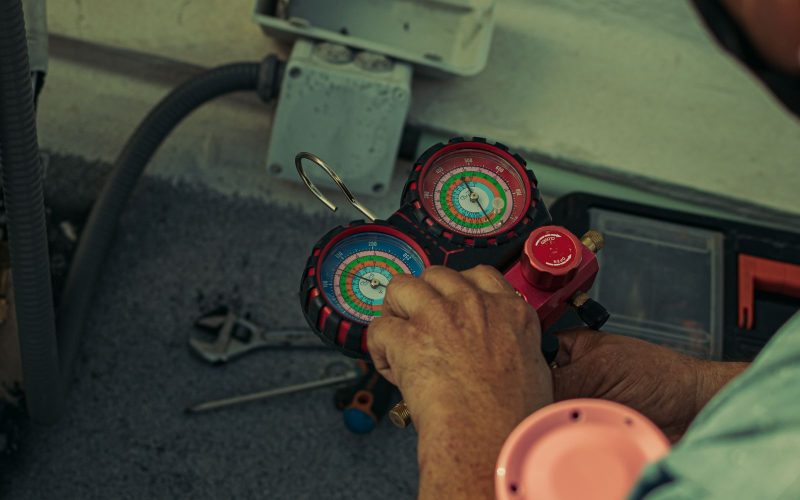
Alt text: “HVAC technician testing a run capacitor and contactor inside a heat pump outdoor unit”
What each repair typically costs
Use this as a sanity check on a quote, not a price list. Published 2026 contractor data puts the average heat pump repair near $400, with most jobs landing between roughly $150 and $650. Anything far above that range should come with an explanation you understand.
| Fix | Who does it | Typical cost | How long it takes |
|---|---|---|---|
| Thermostat mode / fan setting | DIY | $0 | 2 minutes |
| Reset breaker or outdoor disconnect | DIY | $0 | 5 minutes |
| Replace air filter | DIY | $5–$40 | 5 minutes |
| Clear leaves, snow, shrubs from outdoor unit | DIY | $0 | 15 minutes |
| Thermostat replacement | DIY or pro | $120–$400 | 1 hour |
| Run capacitor | Pro | $120–$300 | Under 1 hour |
| Contactor | Pro | $150–$400 | 1 hour |
| Defrost sensor or defrost control board | Pro | $200–$650 | 1–2 hours |
| Blower or condenser fan motor | Pro | $400–$900 | 2–3 hours |
| Refrigerant leak: find, repair, evacuate, recharge | Pro only | $200–$1,500+ | Half day or more |
| Reversing valve | Pro only | $350–$800 | Half day |
| Compressor | Pro only | $1,200–$2,500+ | Full day |
Two things move these numbers more than anything else. First, warranty: most manufacturers cover parts for five to ten years if the system was registered, which can cut a capacitor or valve job down to labor only. Dig out your paperwork before you approve a repair. Second, refrigerant type: R-410A pricing has climbed as the industry moves to A2L refrigerants, so a big recharge on older equipment costs more than it did a few years ago.
Multiply the repair quote by the system’s age in years. If the result comfortably exceeds the cost of new equipment, replace. A $600 repair on a 6-year-old system is easy math; the same repair on a 15-year-old R-410A unit deserves a second quote.
6 mistakes that make things worse
❌ Mistake 1: Leaving the system on Emergency Heat all winter
Emergency heat bypasses the heat pump entirely and runs pure electric resistance. It’s a stopgap for a genuinely dead outdoor unit, not a comfort setting. Running it for weeks can double or triple the heating portion of an electric bill, and it hides the underlying fault.
❌ Mistake 2: Resetting a breaker over and over
A breaker that trips repeatedly is doing its job — it’s detecting a fault. Each reset pushes current back through whatever is shorted or seized, and the risk isn’t inconvenience, it’s fire.
❌ Mistake 3: Covering the outdoor unit for winter
People carry over a habit from air conditioners. A heat pump is your heat source in January, and a cover blocks the airflow it needs, traps moisture against the coil, and makes icing dramatically worse.
❌ Mistake 4: Big overnight setbacks
Dropping the thermostat 8°F at night works with a furnace. With a heat pump it usually backfires: recovering that much temperature calls in the expensive resistance strips, and you spend more than the setback saved.
❌ Mistake 5: Closing vents in unused rooms
Closing supply registers doesn’t redirect heat; it raises static pressure in the duct system, cuts total airflow, strains the blower, and can push the indoor coil toward freezing. Heat pumps are more sensitive to this than furnaces because they depend on moving a large air volume.
❌ Mistake 6: Accepting a refrigerant “top-up” with no leak search
It’s the most common upsell in the trade. The system feels better for a few weeks, then the same call happens next winter, and you’ve paid twice while refrigerant went into the atmosphere.
Alt text: “New pleated air filter next to a heavily clogged filter removed from a heat pump air handler”
When to stop and call someone
You’ve done the free checks and the system still won’t heat. Here’s the line.
Call a licensed technician if: the outdoor unit is completely silent while the indoor blower runs; a breaker trips more than once; the coil ices over and stays iced; you smell burning or hot electrical insulation; the unit is making a grinding, screeching, or metallic banging noise; refrigerant is involved in any way; or the system blows cold air in heat mode with everything set correctly. Noise diagnosis in particular is a useful early warning — our guide to what heat pump noises mean matches sounds to causes.
When you call, save yourself money by having answers ready. What are the outdoor temperature and the thermostat setting? What’s the temperature at a supply register versus a return? Is the outdoor fan turning? Is there ice, and where? Which breakers did you reset, and did they hold? What’s the model and serial number from the data plate on the outdoor unit? A technician who arrives with that information already in hand spends the visit fixing rather than interviewing, and diagnostic fees are usually billed by time.
One last thing worth knowing: a heat pump that limps along for years often isn’t broken so much as badly matched to the house. If yours has never really kept up, it’s worth reading whether a heat pump suits your home and our sizing guide before you spend serious money on repairs.
Frequently asked questions
Why does my heat pump blow cool air even when it’s working?
Because heat pump supply air is typically around 85°F to 95°F at the register, and normal skin temperature is about 91°F. Air that’s warming your house can still feel cool on your hand. A furnace delivers roughly 120°F to 125°F, which is why the comparison feels so stark. Judge the system by whether room temperature is climbing, not by how the airflow feels.
Should I use Emergency Heat when my heat pump isn’t heating?
Only as a short-term bridge. Emergency heat shuts off the heat pump and runs electric resistance elements, which cost roughly two to three times as much per unit of heat. Use it overnight while you wait for a technician if the house is genuinely cold, then switch back. Leaving it on for weeks produces a shocking electric bill.
Can I add refrigerant to my heat pump myself?
No. Handling refrigerant requires EPA Section 608 certification, and a low system has a leak that must be located and repaired first. Systems built since 2025 use A2L refrigerants such as R-454B and R-32, which are mildly flammable and require rated equipment and training. Parts-store recharge cans are the wrong product for a residential heat pump.
My outdoor unit is covered in ice. Is that why it’s not heating?
Probably. A fully iced coil can’t absorb heat from outdoor air, so heating output collapses. Light frost that clears during defrost is normal; solid ice that never clears is a fault, usually a failed defrost sensor or board, a drainage problem, or a low charge. Thaw it with the system off or on fan-only, never with tools or boiling water, and get it diagnosed.
How long should a heat pump run in cold weather?
Long cycles are normal and desirable. A properly sized heat pump in genuinely cold weather may run nearly continuously, and a variable-speed model is designed to. Constant running only signals a problem when the house isn’t reaching setpoint despite it, or when auxiliary heat is running for hours alongside the compressor.
Is it cheaper to repair or replace an old heat pump?
A common rule of thumb is to multiply the repair quote by the system’s age in years and compare that to replacement cost. Systems past twelve to fifteen years facing a four-figure repair usually favor replacement, especially older R-410A equipment where refrigerant costs are rising. Get replacement pricing in the same visit so you can compare properly.
Can I still claim the federal tax credit if I replace my heat pump in 2026?
No. The federal 25C Energy Efficient Home Improvement Credit ended for property placed in service after 31 December 2025. Plan a 2026 replacement without it. State energy office programs, utility rebates, and some remaining HEAR-funded rebates may still apply where you live, so check locally before you buy.
✅ Your checklist
- Confirm it’s actually broken — measure supply air; 85°F to 95°F at the register is normal, not a failure
- Set fan to AUTO — fan on ON blows room-temperature air between cycles and feels like cold air
- Check mode and setpoint — HEAT mode, target at least 3°F above room temperature, no schedule or hold overriding you
- Check every breaker and the outdoor disconnect — including the separate double-pole breaker for backup heat strips
- Replace the filter — if light won’t pass through it, it’s the problem
- Clear the outdoor unit — 18 to 24 inches on all sides, nothing on top, never covered for winter
- Watch a full defrost cycle before panicking — steam, a stopped fan, and a few minutes of cool indoor air are normal
- Never chip ice or pour boiling water — you’ll puncture the coil and turn a small repair into a large one
- Refuse a refrigerant top-up without leak detection — get the leak located and repaired in writing
- Have your details ready when you call — model and serial, outdoor temperature, supply air reading, what you already checked
Sources

Heat Pump Reviews Editorial Team
Our editors research heat pumps full time: manufacturer specifications, AHRI and ENERGY STAR listings, published cold-climate performance data, warranty terms, installer feedback and owner reviews. We do not accept payment for placement, and every rating follows our published methodology.