Inverter vs Single-Stage vs Two-Stage Heat Pumps: What You’re Actually Paying For
Compressor staging decides your comfort, noise, cold-weather output and repair bill. Here's what single-stage, two-stage and inverter systems each buy you — and why an oversized inverter still short-cycles.

You’re paying for how the compressor behaves, not how hard it blows
Single-stage runs at one speed. Two-stage has a high and a low. Inverter systems slide anywhere in between. That single design choice sets your comfort, your noise level, your cold-weather output and your repair bill for the next 15 years.
An inverter (variable-speed) heat pump gives you the best comfort, the quietest operation and the strongest cold-weather heating — but you’re buying comfort more than you’re buying energy savings, and the electronics that make it work are the expensive thing to fix.
Single-stage is cruder, cheaper and simpler to repair, and it’s genuinely the right answer for mild climates, rentals and tight budgets. Two-stage sits in the middle and is the value pick for a lot of ordinary houses. The wrong move is buying an inverter system that’s too big for your house, because it will short-cycle anyway and you’ll have paid extra for nothing. 💡
Every heat pump quote you get has a compressor type buried in it somewhere. Most homeowners never notice. They see a price, a brand name and a SEER2 number, and they pick.
But the compressor type is doing more work than the brand name. It decides whether your living room swings four degrees between cycles or holds steady. It decides whether the outdoor unit thumps on at 2 a.m. or hums along at a speed you can’t hear. In a cold climate, it decides whether the system still puts out useful heat at 5°F or hands the job over to electric strips.
It also decides what breaks and what it costs to fix. That part rarely comes up in the sales conversation, so we’ll cover it honestly here.
This guide is only about compressor staging. If you’re comparing brands or deciding between ducted and ductless, we have separate pieces for ducted versus ductless and for head-to-head brand matchups. Here we’re staying on the one question: single-stage, two-stage, or inverter?
What’s in this guide
- What compressor staging actually means
- The three-way comparison
- Single-stage: full blast or off
- Two-stage: high and low
- Variable-speed and inverter: the whole range
- Turndown ratio, and why sizing matters more
- Why inverters hold heat in cold weather
- Reliability and repair, honestly
- Cost versus benefit
- Which one should you buy?
- How to tell what your quote is offering
- Common misconceptions
- 6 mistakes buyers make
- Frequently asked questions
- Your buying checklist
What compressor staging actually means
The compressor is the pump at the heart of the machine. It squeezes refrigerant, and that squeeze is what moves heat from outside to inside in winter and the other way in summer. Our explainer on how heat pumps work covers the full cycle. What matters here is one thing: how many different speeds that compressor can run at.
A single-stage compressor has one speed. The motor is wired straight to line voltage, it spins at whatever the grid frequency dictates, and it either runs or it doesn’t. There is no in-between.
A two-stage compressor has two. Depending on the design, it might use two separate cylinders, a bypass valve that unloads part of the compression chamber, or a two-speed motor. Whatever the mechanism, you get a low output — commonly around 60 to 70% of full capacity, though it varies by model — and a high output.
A variable-speed compressor uses an inverter drive. That’s a power electronics package that takes your incoming 240-volt AC power, converts it to DC, and then synthesizes a new AC waveform at whatever frequency it wants. Change the frequency, and the compressor motor changes speed. It can spin slowly, quickly, or anywhere in between, and it can change smoothly while running.
“Inverter” and “variable-speed” mean essentially the same thing in a sales conversation. Technically, the inverter is the drive electronics and variable-speed describes the result. You’ll also see “modulating” and “fully modulating.” Treat them as the same family.
One caution on labels: some systems advertise a “variable-speed blower” or “ECM fan motor” while the compressor is still single-stage. That’s a real comfort improvement for airflow and quiet, but it isn’t a variable-speed compressor and it won’t give you the part-load efficiency or the cold-weather behavior described below. Check which component the brochure is talking about.
Single-stage is a light switch. Two-stage is a two-position dimmer. Variable-speed is a proper dimmer knob that slides anywhere from a faint glow to full brightness — and adjusts itself continuously without you touching it.
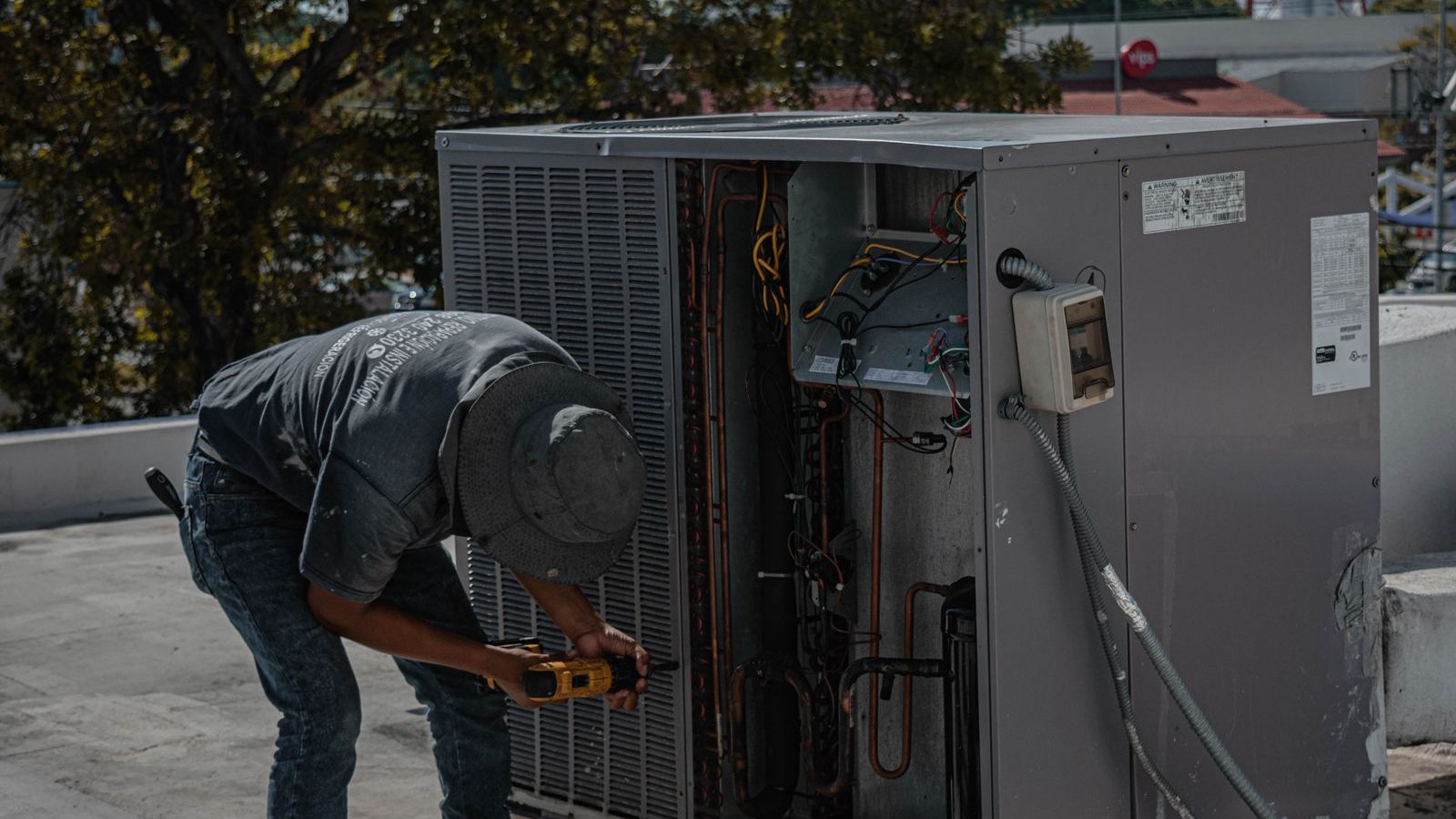
Alt text: “Three heat pump outdoor units compared showing single-stage, two-stage and inverter-driven compressor assemblies”
The three-way comparison
Here’s the whole argument in one table. Ranges are typical for residential equipment sold in the US in 2026 and vary by brand, size and model line.
| Factor | Single-stage | Two-stage | Variable-speed / inverter |
|---|---|---|---|
| Compressor speeds | One (on or off) | Two (roughly 65% and 100%) | Continuous, roughly 25–100%+ of rated capacity |
| Typical SEER2 range | About 14.3–16 | About 16–18 | About 17–24+, highest on small ductless |
| Typical HSPF2 range | About 7.5–8.5 | About 8–9 | About 8.5–11+ |
| Indoor temperature swing | Noticeable, often 2–4°F | Smaller | Smallest, often held within about 1°F |
| Humidity control (cooling) | Weakest — short runs remove less moisture | Better — long low-stage runs dehumidify | Best — long, slow runs plus dedicated dry modes on many models |
| Noise | Loudest, with an audible start every cycle | Quieter on low stage | Quietest; premium models rated in the high 40s to mid 50s dB(A) outdoors |
| Cold-weather capacity | Falls steadily as it gets colder | Falls steadily; high stage helps a little | Can overspeed above nominal to hold capacity far lower |
| Cycling behavior | Cycles constantly on mild days | Fewer cycles | Fewest cycles — if correctly sized |
| Parts count and complexity | Lowest | Moderate | Highest — inverter drive, sensors, communicating controls |
| Repair difficulty | Any technician, any supply house | Most technicians | Brand-specific boards, diagnostic tools and training |
| Thermostat | Any standard 24V thermostat | Standard or two-stage thermostat | Often a proprietary communicating thermostat |
| Best all-round fit for most US homes | Mild climates, budgets, rentals | The value sweet spot for a lot of houses | Cold or humid climates, long ownership, comfort-focused buyers |
Notice what changes down that table. Efficiency improves as you go right, but only modestly. Comfort, quiet and cold-weather output improve a lot. Complexity and repair cost also go up a lot. That’s the real trade, and it’s why the efficiency-only argument for inverters is weaker than most sales pitches suggest.
Single-stage: full blast or off
A single-stage heat pump is the simplest machine you can buy. The thermostat closes a contact, a contactor pulls in, the compressor and fan start at full power, and they run until the thermostat is satisfied. Then everything stops.
That simplicity is genuinely valuable. There are fewer components in the electrical path, no drive electronics to fail, and no proprietary communication protocol between the outdoor unit and the thermostat. Any competent technician in any town can work on it. The parts — contactor, run capacitor, defrost board, reversing valve solenoid — are cheap, standardized and stocked at every supply house. Five, ten or fifteen years from now, that will still be true.
The downsides are all consequences of the one-speed design. Because the system is sized for the coldest or hottest few days of the year, it’s oversized for the other 90% of the season. So on a 55°F fall day it satisfies the thermostat in a few minutes and shuts off, then restarts a while later. Each of those cycles produces a temperature swing you can feel, typically two to four degrees between the thermostat cutting in and cutting out, and more in rooms far from the air handler.
Cooling suffers most from short runs. Removing humidity takes time. The indoor coil has to get properly cold and stay cold before condensation runs off it in useful quantities, and a ten-minute cycle barely gets there. That’s why a single-stage system in a humid climate can hold 74°F and still feel clammy — the thermostat is happy and the moisture is still in the air.
Then there’s the noise. Not the running noise, which is usually fine, but the starts. A single-stage compressor slams from zero to full speed against system pressure, and you hear it: a thump, a surge, and the fan spinning up. If the unit sits under a bedroom window, you’ll notice. Our guide to the quietest heat pumps explains why start noise matters more than the dB(A) number on the label.
In a mild climate with a modest cooling season, a correctly sized single-stage heat pump on well-sealed ducts is a perfectly good machine. Plenty of homeowners with one are entirely happy. The complaints cluster in humid summers, cold winters, and houses where the unit was oversized to begin with.
Two-stage: high and low
A two-stage system spends most of its life on low. On a typical spring or fall day, the low stage — commonly around 65 to 70% of rated capacity, though it differs by model — is enough to cover the load on its own. So instead of running full blast for eight minutes and stopping, the system runs gently for thirty or forty minutes.
Longer runs fix a lot of problems at once. Air keeps moving, so the temperature difference between rooms shrinks. The thermostat swing narrows. In cooling, the coil stays cold long enough to actually pull moisture out of the air, which is the single biggest comfort improvement most people notice in a humid climate. And the outdoor unit is meaningfully quieter on low, because the compressor and fan are both turning slower.
The high stage exists for the extremes: a July afternoon, a January cold snap, or a recovery from a deep setback. The control logic typically brings on high stage when low stage has been running for a set period without satisfying the thermostat, or when the room temperature is more than a degree or two away from setpoint.
What you don’t get, relative to an inverter, is fine control. A two-stage system on a very mild day still cycles, because even the low stage may be more than the house needs. It also doesn’t overspeed in cold weather — its high stage is its ceiling, and that ceiling drops as the outdoor temperature falls, exactly as it does on a single-stage unit.
On complexity, two-stage sits in a comfortable middle. There’s a second solenoid or unloader valve and slightly smarter control logic, but there’s no inverter drive and often no proprietary communicating thermostat. Most brands run two-stage equipment on conventional 24-volt wiring, so a standard two-stage thermostat works and any technician can troubleshoot it with a meter. Parts cost a little more than single-stage, but not dramatically.
For a large fraction of American houses — moderate climate, real but not brutal summers, a homeowner who plans to stay a while but isn’t chasing perfection — two-stage is the honest value pick. It captures most of the comfort improvement for a fraction of the complexity premium.
Two-stage buys you about seventy percent of the comfort improvement for about thirty percent of the complexity.
— the case for the middle option
Variable-speed and inverter: the whole range
An inverter-driven heat pump does something the other two can’t: it matches its output to the load, continuously, all day, without stopping. Manufacturer specifications commonly show a modulation range from roughly 25 to 30% of rated capacity at the bottom up to 100% or a little above at the top. Some cold-climate models publish a wider range still.
Think about what that means on an ordinary day. Your house needs, say, 40% of the system’s rated output at 10 a.m., 55% at 2 p.m. and 30% at midnight. An inverter system simply sits at those numbers. It doesn’t cycle. The indoor temperature barely moves — many owners report it holding within about a degree all day.
The efficiency benefit comes from the same behavior. A compressor running slowly is moving heat across a coil that’s effectively oversized for the reduced flow, which means smaller temperature differences, lower pressures and less work per unit of heat moved. Part-load efficiency on a good inverter system is often better than its full-load efficiency. That’s the opposite of how a single-stage machine behaves, and it’s a large part of why SEER2 and HSPF2 numbers run higher on inverter equipment. Our SEER2, HSPF2 and COP explainer walks through how those seasonal ratings are calculated and why they favor modulating systems.
Quiet is the benefit people underrate until they live with it. An inverter unit spends most of its time at low speed, so what you hear outside is a soft hum rather than a compressor thumping on. Indoors, a variable-speed blower moving air slowly is close to silent. Premium models are commonly rated in the high 40s to mid 50s dB(A) outdoors at low speed. The most efficient heat pumps on the market are essentially all inverter-driven, and so are nearly all of the quietest ones — the two lists overlap heavily for exactly this reason.
The cost is complexity. An inverter drive is a substantial piece of power electronics: rectifiers, capacitors, insulated-gate transistors, a microprocessor and firmware, all sitting in a metal box outside your house in every kind of weather. Add temperature and pressure sensors, an electronic expansion valve, and often a communicating thermostat that only talks to that brand. Every one of those is a thing that can fail, and none of them is generic.
Inverter technology is what makes strong cold-weather heating possible, but it doesn’t guarantee it. Plenty of mid-tier inverter systems are designed for mild climates and lose capacity below freezing much like a two-stage unit. If cold performance matters, check the manufacturer’s published capacity at 17°F and 5°F rather than assuming the word “inverter” covers it.
Turndown ratio, and why sizing matters more
This is the part almost nobody explains, and it’s the single most useful idea in this guide.
An inverter compressor has a floor. It cannot modulate down to zero. Below some minimum speed the motor won’t run reliably, the oil won’t circulate properly and the refrigerant won’t move, so the manufacturer sets a minimum output — typically somewhere around a quarter to a third of rated capacity. The ratio between maximum and minimum output is the turndown ratio. A system that runs from 3 tons down to 1 ton has a 3:1 turndown.
Now here’s the trap. If your house genuinely needs 2.5 tons on a design day, but the contractor installs a 5-ton inverter system “to be safe,” that system’s minimum output might be around 1.5 tons. On a mild 60°F day when your house only needs half a ton, the system cannot go that low. So it runs at 1.5 tons, overshoots, shuts off, waits, and starts again — short-cycling, exactly like a single-stage unit, on the equipment you paid a premium to avoid that.
Here’s the same idea in numbers. These are illustrative, using a 25% modulation floor:
| Installed size | Minimum output at ~25% floor | House load on a mild day (~0.5 ton) | What happens |
|---|---|---|---|
| 2.5 tons (correctly sized) | About 0.6 tons | 0.5 tons | Runs near its floor almost continuously. Steady, quiet, efficient. |
| 3.5 tons (moderately oversized) | About 0.9 tons | 0.5 tons | Cycles on mild days. Some of the benefit lost. |
| 5 tons (badly oversized) | About 1.25 tons | 0.5 tons | Cycles frequently. Comfort and humidity control drop toward single-stage levels. |
The conclusion runs against the common sales line. People say “inverters are forgiving, so a bit oversized is fine.” The opposite is closer to the truth: because you’re paying specifically for the ability to run continuously at low load, oversizing destroys the exact thing you bought. Correct sizing matters more with an inverter, not less. Our heat pump sizing guide covers Manual J load calculations and what to ask your contractor for, and our piece on heat pump short cycling explains what the symptom looks like once it starts.
Multi-zone ductless systems have their own version of this problem. When only one small indoor head is calling, the outdoor unit may be well below its comfortable minimum, so it cycles even though the equipment is nominally right for the whole house.
If a contractor quotes an inverter system without performing a room-by-room load calculation — and instead sizes it by square footage, by your old unit’s tonnage, or by adding a half-ton “for safety” — you are at real risk of buying an oversized modulating system. Ask for the Manual J. A contractor who won’t produce one is telling you something.
Why inverters hold heat in cold weather
Every air-source heat pump loses heating capacity as the outdoor temperature drops, because there’s less heat available in cold air and the refrigerant is working across a bigger temperature gap. That’s physics and no compressor design escapes it entirely.
What an inverter can do is compensate. A single-stage compressor has one speed, so as it gets colder its output simply falls along a curve — often to somewhere around half of its rated capacity by the time you reach 5°F. A two-stage compressor does the same, with the high stage as its ceiling.
An inverter compressor, by contrast, can spin faster than its nominal rating. As the outdoor temperature falls, the control system raises compressor frequency, pushing more refrigerant through the circuit to make up for the thinner heat available outside. Cold-climate models are built around this: the compressor, the drive electronics and the coils are all designed to tolerate sustained operation above nominal speed. That’s why manufacturer data for these systems often shows rated or near-rated heating capacity still available at 5°F, with useful output continuing well below 0°F.
NEEP’s cold-climate air-source heat pump specification is built on this behavior. It requires a COP of at least 1.75 at 5°F at maximum capacity operation, and it asks manufacturers to publish both minimum and maximum steady-state capacity at each test condition — which is precisely the turndown data discussed above. Practically every product on that list is inverter-driven, because a fixed-speed compressor has no way to meet the requirement.
The comfort consequence is the part homeowners feel. A system that holds its capacity in the cold doesn’t need to call in electric resistance backup, and resistance heat is roughly three times more expensive per unit of heat delivered. In a genuinely cold climate, the difference between a heat pump that carries the house to 5°F and one that hands over to strips at 25°F shows up on the bill every single month of winter. Our roundup of the best heat pumps for cold climates covers the models built for this.
Inverter systems also tend to manage defrost more gracefully, because the controls can read coil and ambient sensors and adjust rather than defrosting on a fixed timer. Fewer unnecessary defrost cycles means less heat pulled back out of your house to melt a coil that wasn’t badly iced in the first place.
Alt text: “Chart comparing heating capacity retention at low outdoor temperatures for single-stage, two-stage and inverter heat pumps”
Reliability and repair, honestly
This is where the sales conversation usually goes quiet, so let’s be direct about it.
The inverter drive board is the expensive failure point. It’s a dense piece of power electronics living outdoors, exposed to heat, humidity, vibration and voltage events on your incoming power. When it fails, the system usually stops entirely and throws a fault code, and the fix is a board replacement rather than a component-level repair. Published 2026 contractor pricing for HVAC control and inverter board replacement commonly lands somewhere in the $400 to $1,200 range installed, with premium or hard-to-source brand-specific boards running higher. Compare that to a run capacitor or a contactor on a single-stage unit — usually a quick diagnosis and a part that typically runs somewhere in the $150 to $400 range installed.
The second issue is availability, and it’s the one we’d weigh most heavily. A capacitor is a generic part; any supply house has one. An inverter board is specific to a model and revision. Established manufacturers with long US service networks generally stock boards for many years after a model is discontinued. Budget and value brands, and particularly brands that enter and leave the US market or rebrand frequently, are a genuine risk here. A twelve-year-old inverter system with an unobtainable board is not a repair — it’s a replacement.
The third is who can work on it. Diagnosing an inverter fault often needs brand-specific training, a manufacturer service tool or app, and sometimes a dealer account to buy the part. In a metro area that’s a mild inconvenience. In a rural county with three HVAC companies, it can mean waiting days for the one technician who’s certified, or paying a premium to the dealer who sold it.
None of this means inverter systems are unreliable. The compressors themselves often last well, in part because soft-starting and steady operation put far less mechanical and electrical stress on them than the repeated hard starts a single-stage unit endures. The failure modes just shift: fewer worn mechanical parts, more electronics. Our guide to heat pump lifespan goes deeper on what actually wears out and when.
| Failure point | Single-stage | Inverter |
|---|---|---|
| Most common repair | Capacitor, contactor, defrost board | Sensors, inverter/control board, expansion valve |
| Typical repair cost | Roughly $150–$400 for common parts | Roughly $400–$1,200 for a board |
| Part availability | Generic, any supply house | Brand and model specific |
| Who can fix it | Essentially any HVAC technician | Often needs brand training and tools |
| Compressor stress | Hard start every cycle | Soft start, steady running |
| Diagnosis | Meter and gauges | Fault codes plus manufacturer service tool |
Before buying an inverter system from a brand you don’t recognize, ask the contractor two questions: how long the manufacturer commits to stocking control boards after a model is discontinued, and how many technicians in your area are factory-trained on it. Vague answers to either are a reason to choose a different brand, not a different compressor type.
Cost versus benefit
Here’s what the premium buys, laid out plainly. Installed price figures are typical 2026 contractor ranges for a comparable ducted residential system and vary widely by region, home and installer. Get real quotes; our heat pump cost guide covers what drives the number.
| What you pay / get | Single-stage | Two-stage | Variable-speed / inverter |
|---|---|---|---|
| Typical installed premium over single-stage | Baseline | Commonly about $1,000–$2,500 more | Commonly about $1,500–$5,000 more |
| Realistic energy savings vs single-stage | Baseline | Often around 5–15% | Often around 15–30%, climate dependent |
| Comfort improvement | Baseline | Noticeable | Large |
| Humidity control | Weak | Good | Best |
| Noise improvement | Baseline | Moderate | Large |
| Cold-climate heating | Backup heat needed sooner | Backup heat needed sooner | Holds capacity far lower |
| Expected repair cost over 15 years | Lowest | Low to moderate | Higher, concentrated in electronics |
| Payback on energy alone | n/a | Often plausible in a moderate-to-heavy use climate | Frequently does not pay back on energy alone in a mild climate |
Do the arithmetic on your own bill before you decide. If your combined heating and cooling cost is $1,200 a year, a 20% saving is $240 a year. A $3,000 premium is a twelve-and-a-half-year payback before you count any repair-cost difference — which is roughly the life of the equipment. If your bill is $3,000 a year because you’re heating through a long northern winter, the same premium pays back in five years and the cold-weather capacity is worth having regardless.
That’s the honest framing: in a heavy-use climate, an inverter can pay for itself. In a mild one, it usually doesn’t on energy alone — and that’s fine, as long as you know you’re buying comfort, quiet and humidity control rather than a financial return.
The federal 25C tax credit ended for property placed in service after December 31, 2025, so don’t budget around it. But many state and utility programs — and HEAR-funded programs where they’re running — still pay more for higher-efficiency or cold-climate-rated equipment, which can narrow the gap between tiers considerably. Our 2026 rebates guide covers what’s still available.
Which one should you buy?
Match the machine to your situation, not to the brochure.
| Your situation | Best fit | Why |
|---|---|---|
| Mild climate, short heating and cooling seasons | Single-stage | Not enough run hours for the premium to return anything. Spend the money on ductwork and installation quality instead. |
| Rental property or flip | Single-stage | Low first cost, cheap and universal repairs, no proprietary thermostat for a tenant to break. |
| Tight budget, need heat now | Single-stage | A correctly sized single-stage system beats an oversized inverter system every time. |
| Moving within 5 years | Single-stage or two-stage | You won’t own it long enough to recover the premium, and buyers rarely pay extra for the compressor type. |
| Typical suburban home, moderate climate, staying 10+ years | Two-stage | The value sweet spot. Most of the comfort gain, conventional controls, manageable repairs. |
| Humid summers, clammy house | Two-stage or inverter | Long low-speed run times are what actually remove moisture. Inverter is best here. |
| Cold climate, want to minimize backup heat | Inverter (cold-climate rated) | Only a variable-speed compressor can overspeed to hold capacity at low temperatures. |
| Bedroom or patio near the outdoor unit | Inverter | No hard starts, lowest sound at part load. |
| Forever home, comfort is the priority | Inverter | Steady temperatures, quiet operation and the longest window to recoup the premium. |
| Ductless mini-split of any kind | Inverter (you have no choice) | Essentially all residential mini-splits sold in the US are inverter-driven by design. |
| Rural area with few HVAC contractors | Single-stage or two-stage | Service availability outweighs the efficiency gain when the nearest certified technician is an hour away. |
How to tell what your quote is offering
Contractor proposals are inconsistent about this, and some are vague on purpose. Here’s how to pin it down.
Look for the words
“Variable speed,” “variable-capacity,” “inverter-driven,” “modulating” or “fully modulating” on the outdoor unit means an inverter compressor. “Two-stage,” “dual-stage” or “2-stage” means two. If the proposal says nothing at all, assume single-stage — that’s the default and it’s what gets omitted.
Check which component they mean
“Variable-speed blower,” “variable-speed air handler” or “ECM motor” describes the indoor fan, not the compressor. A single-stage compressor is frequently paired with a variable-speed blower. Make the contractor confirm the compressor in writing.
Get the model number and look it up
Every proposal should list the exact outdoor unit and indoor unit model numbers. Search the manufacturer’s product page or submittal sheet. Reputable brands publish the compressor type plainly.
Find the modulation range on the spec sheet
This is the giveaway. Inverter submittal data lists heating and cooling capacity at both minimum and maximum operation — two numbers per condition instead of one. Divide max by min and you have the turndown ratio.
Check the AHRI certificate
The proposal should reference an AHRI reference number for the matched indoor and outdoor combination. That listing confirms the rated SEER2, EER2 and HSPF2 for the exact pair being installed, which stops a mismatched-system surprise later.
Ask what thermostat it requires
If the answer is a proprietary communicating thermostat from that brand, you have an inverter system with brand-locked controls. Ask what happens if you want a different thermostat later — often the answer is that you can’t have one.
Compare like with like
If one contractor quotes single-stage and another quotes inverter, you aren’t comparing prices — you’re comparing products. Ask each to price both tiers on the same load calculation so the difference is visible.
“What’s the minimum and maximum heating capacity of this outdoor unit at 47°F and at 17°F?” A single-stage unit has one number. A two-stage has two coarse ones. An inverter has a published range. The answer tells you the compressor type and the turndown ratio in one go.
Common misconceptions
“A variable-speed system pays for itself in energy savings.” Often it doesn’t. In a mild climate with a modest bill, the premium can exceed the lifetime energy savings. That doesn’t make it a bad purchase — you’re also buying steady temperatures, quiet operation and real humidity control, all of which are worth money to a lot of people. It just isn’t primarily a financial decision, and anyone selling it as one is overreaching.
“Inverters are forgiving on sizing.” The reverse. A modulation floor means an oversized inverter cycles on mild days just like a single-stage unit, and you’ve paid extra for a capability you can’t use. Sizing discipline matters most on the equipment that costs the most.
“A higher SEER2 number means better comfort.” SEER2 measures seasonal cooling efficiency under a standard test procedure. It doesn’t measure temperature stability, humidity removal or noise. Two systems with the same SEER2 can feel completely different in a room. Judge comfort by compressor staging and blower behavior, not by the yellow label.
“Single-stage systems are obsolete.” They’re still widely sold, still meet current federal minimum efficiency standards, and still make sense in plenty of situations. Simplicity has real value over a fifteen-year ownership window.
“Inverter systems break down more often.” Not exactly. They have more electronics, so a different set of things can fail, and those failures cost more to fix. But steady, soft-start operation is easier on the compressor itself. The right way to say it is that the risk shifts from mechanical wear toward electronics and parts availability.
“Two-stage is just a marketing tier.” It’s a genuine mechanical difference and the low-stage run time delivers a real comfort improvement, particularly for dehumidification. It’s the most under-recommended option in the market, mostly because it isn’t the flagship and it isn’t the loss-leader.
“All inverters work in the cold.” Only the ones designed for it. Check published capacity at 5°F, not the marketing copy.
6 mistakes buyers make
❌ Mistake 1: Buying an inverter system without a load calculation
This is the big one. The contractor sizes by square footage or by matching your old unit, adds a margin “to be safe,” and installs a modulating system that’s too big to modulate down to your actual load. You get short cycling, poor dehumidification and the price tag of a premium system.
❌ Mistake 2: Comparing quotes on price when the compressor types differ
A $9,000 single-stage quote and a $15,000 inverter quote look like one contractor is gouging you. They’re selling different products. Homeowners routinely pick the cheap quote thinking they got a deal, or the expensive one thinking they got quality, without knowing what changed.
❌ Mistake 3: Spending the premium on the compressor instead of the ductwork
A top-tier inverter system feeding leaky, undersized ducts in a hot attic will underperform a single-stage system on good ducts. The modulating compressor can’t fix airflow it never gets. Money spent on sealing, sizing and insulating duct runs almost always returns more comfort per dollar.
❌ Mistake 4: Ignoring parts availability on an unfamiliar brand
Buyers chase a low price on an inverter system from a brand with a thin US service presence. Eight years later the board fails, the part is backordered or discontinued, and no local technician wants to touch it. The “value” system becomes a full replacement.
❌ Mistake 5: Running an inverter system like a furnace
Deep nightly setbacks and thermostat cranking force a modulating system to run at maximum to recover, which is the least efficient thing it does, and can pull in electric backup heat. You bought a machine that saves money by running gently and continuously, then commanded it to sprint twice a day.
❌ Mistake 6: Assuming “inverter” solves cold-weather heating by itself
Homeowners in cold climates buy a mid-tier inverter system, then find it’s leaning on electric strips by the time it hits 20°F. The compressor modulates, but the system was never engineered to overspeed and hold capacity in deep cold.
Refrigerant handling, high-voltage work and inverter drive diagnostics all require a licensed, EPA-certified technician. Inverter drives hold a charge in their capacitors after power is removed — opening one is genuinely dangerous, and doing so will usually void your warranty as well. New residential equipment also uses A2L refrigerants (R-454B or R-32), which carry their own handling and leak-detection requirements. See our R-454B transition guide.
Frequently asked questions
Is an inverter heat pump worth the extra money?
It depends on your climate and how long you’ll own the house. In a cold or humid climate with high run hours and a ten-plus year horizon, yes — you get real energy savings on top of the comfort. In a mild climate with a modest bill, the premium often won’t pay back on energy alone, so buy it for the comfort, quiet and humidity control or don’t buy it at all.
What’s the difference between “inverter” and “variable-speed”?
In practice, nothing. The inverter is the drive electronics that vary the compressor’s speed; variable-speed describes what the compressor then does. Manufacturers use both terms, plus “modulating” and “variable-capacity,” for the same technology. Just confirm the term is describing the compressor and not the indoor blower.
Can an inverter heat pump still short-cycle?
Yes, if it’s oversized. Every inverter compressor has a minimum output, commonly around a quarter to a third of rated capacity. When the house needs less than that — which happens on mild days — the system has to cycle on and off. This is why a correct load calculation matters more with an inverter, not less.
How much does it cost to fix an inverter board?
Published 2026 contractor pricing for control and inverter board replacement commonly runs somewhere in the $400 to $1,200 range installed, with premium or scarce brand-specific boards higher. By comparison, the common single-stage repairs — a run capacitor or a contactor — typically fall in the $150 to $400 range. Costs vary a lot by region and by how easily the part can be sourced.
Do inverter heat pumps last as long as single-stage ones?
The compressors often do well, because soft starting and steady running are much easier on them than repeated hard starts. What changes is the failure mode: more electronics means more electronic failures, and the practical lifespan can be cut short by parts availability rather than by anything wearing out.
Is two-stage a real upgrade or just a middle price point?
It’s a real mechanical difference. The low stage lets the system run longer at reduced output, which evens out room temperatures and — most noticeably — removes far more humidity in cooling season than a single-stage unit’s short bursts. For a lot of ordinary homes it captures most of the comfort benefit without the electronics premium.
Do all mini-splits have inverter compressors?
Essentially all residential ductless mini-splits sold in the US are inverter-driven — it’s fundamental to how the format works, since a single outdoor unit has to serve varying loads across one or more indoor heads. The staging question mostly applies to central ducted systems.
✅ Your checklist
- Get a Manual J first — the load calculation comes before the compressor decision, especially for an inverter system
- Price two or three tiers from every contractor — on the same load calculation, so you’re comparing installers not products
- Confirm the compressor in writing — “variable-speed blower” is not a variable-speed compressor
- Find the modulation range — min and max capacity on the submittal sheet gives you the turndown ratio
- Check 17°F and 5°F capacity — if you’re in a cold climate, this number decides your winter bills
- Do the payback math on your own bill — not on a generic percentage from a brochure
- Ask about board availability and local training — especially for an unfamiliar brand
- Fix the ducts before upgrading the compressor — airflow problems defeat any staging tier
- Check state and utility rebates — the federal 25C credit ended for systems placed in service after December 31, 2025
- Decide what you’re actually buying — comfort, quiet and humidity control are legitimate reasons on their own
Sources

Heat Pump Reviews Editorial Team
Our editors research heat pumps full time: manufacturer specifications, AHRI and ENERGY STAR listings, published cold-climate performance data, warranty terms, installer feedback and owner reviews. We do not accept payment for placement, and every rating follows our published methodology.