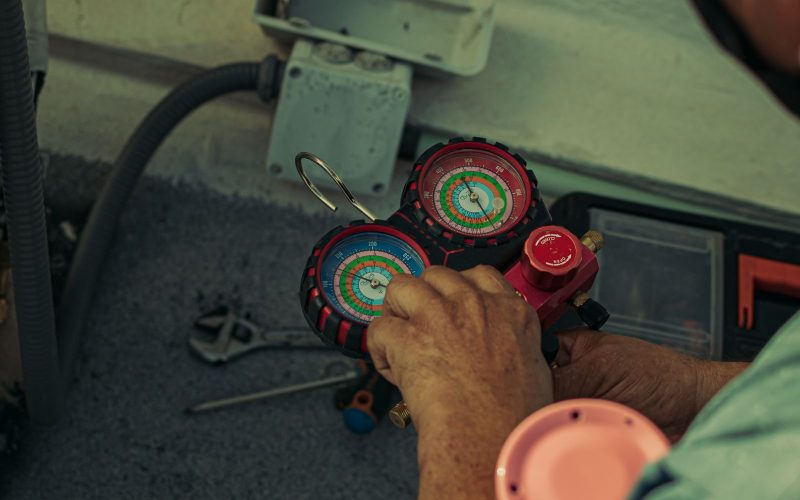
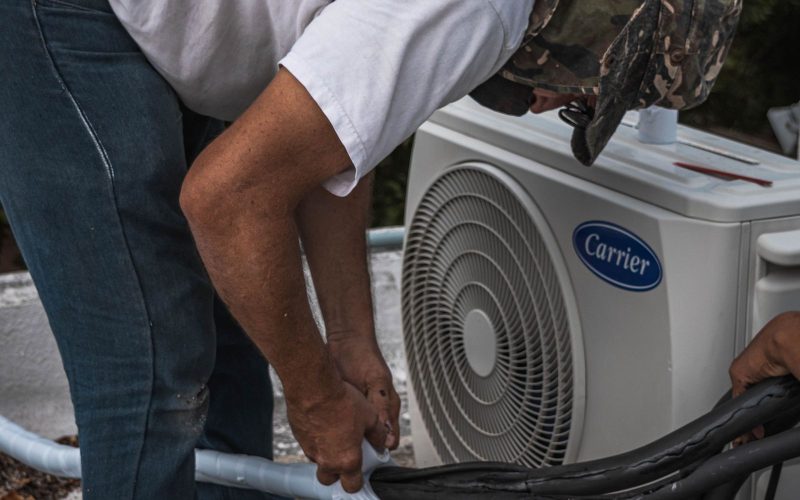
Heat Pump Turning On and Off Every Few Minutes? How to Stop Short Cycling
Short cycling wastes electricity, leaves the house clammy, and wears out the compressor. Learn how to count cycles, what a normal run time looks like, and why even an inverter unit cycles when it's oversized.

Short runs, frequent restarts — here’s what’s behind it
If your heat pump runs three or four minutes, shuts off, then fires back up again a few minutes later, that’s short cycling. The three most common reasons are a dirty filter, a thermostat in the wrong spot, and equipment that’s simply too big for the house. The first two are cheap. The third is the one nobody wants to hear.
Short cycling means your heat pump keeps starting and stopping before it finishes the job — typically runs under 10 minutes and more than about six starts an hour — and it’s usually caused by restricted airflow, a thermostat problem, low refrigerant, or oversized equipment.
Start with the free stuff: change the filter, open every supply register, and check whether your thermostat is sitting in a sunbeam or above a lamp. If those don’t fix it, the next suspects are a frozen coil, a low refrigerant charge, a failing capacitor, or a system that was sized for a house twice as leaky as yours. 💡
Here’s why this matters more than it sounds like it should.
A heat pump does its best work when it’s running. Not starting. Not stopping. Running. The compressor draws its biggest current surge at startup, the coil needs several minutes of steady operation before it’s pulling real moisture out of the air, and the blower needs time to actually move conditioned air to the far corners of the house. A system that quits after four minutes never gets to any of that. You pay for all the starting and get very little of the useful part.
The damage shows up in four ways. Your house feels clammy in summer because the coil never runs long enough to dehumidify. Rooms furthest from the air handler stay uncomfortable because the air never reaches them. Your power bill creeps up because startup is the least efficient moment in the whole cycle and you’re paying for dozens of them a day. And the compressor — the single most expensive part in the system — racks up wear it was never meant to see.
What’s in this guide
- What short cycling actually is
- How to count cycles and prove it
- Normal run times: mild vs. cold weather
- Cause, symptom pattern, and who fixes it
- Airflow: filters, returns, and closed registers
- Thermostat placement and differential
- Low refrigerant and frozen coils
- Capacitors, contactors, and control boards
- Oversized equipment: the hard one
- When the ductwork is the real culprit
- What each fix typically costs
- 6 mistakes that make short cycling worse
- Frequently asked questions
- Your final checklist
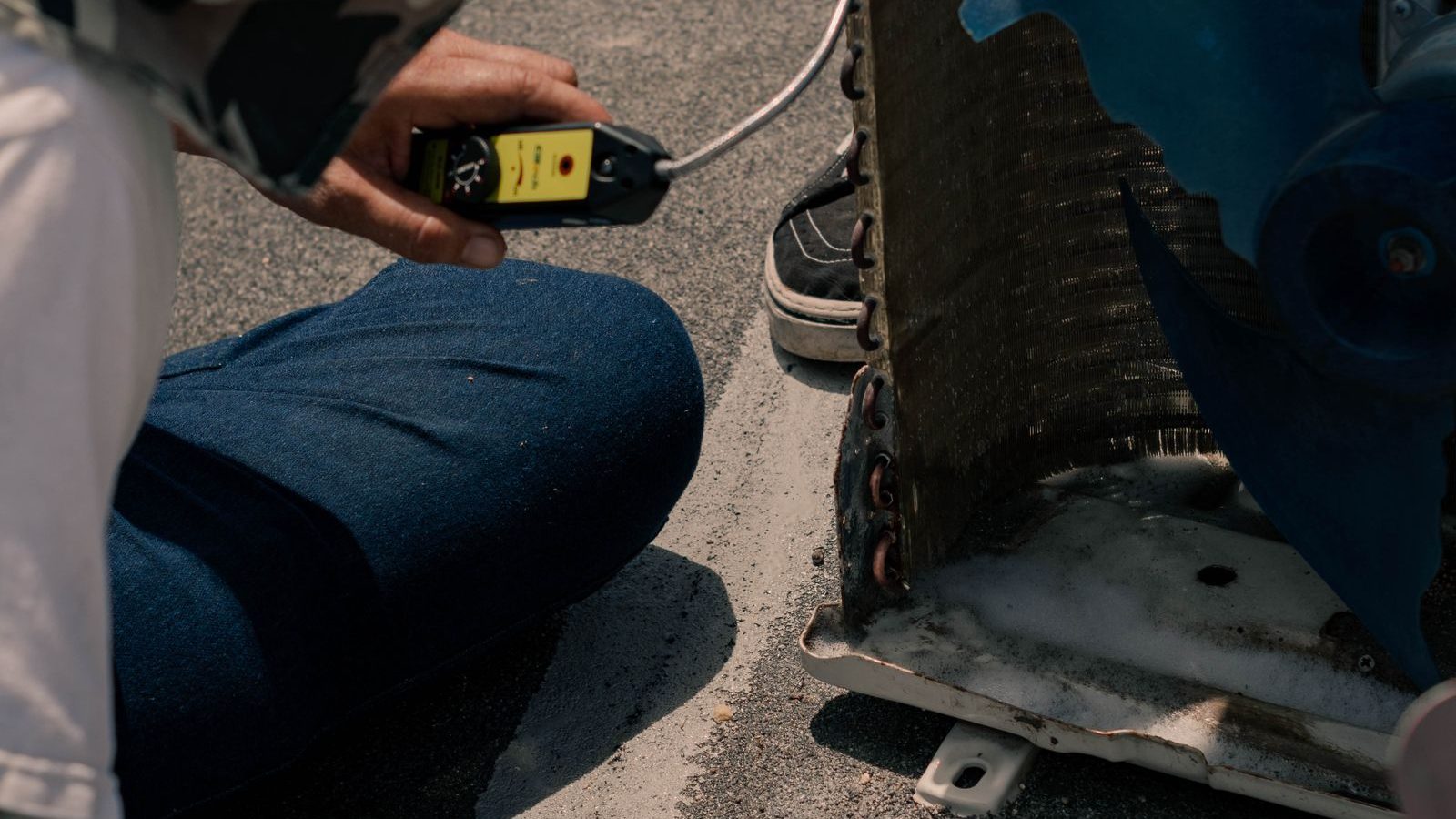
Alt text: “Homeowner timing how long an outdoor heat pump unit runs before shutting off”
What short cycling actually is
Short cycling is a pattern, not a single event. Your heat pump gets a call for heating or cooling, starts up, runs for a short stretch — often three to eight minutes — then shuts down before the house has actually reached the temperature you asked for. A few minutes later it starts again. And again. All day.
The word “short” is doing a lot of work there, so let’s put numbers on it. Industry guidance generally treats a run of roughly 10 to 20 minutes as healthy for a single-stage system, with about two to three starts per hour when the weather is moderate. Once you’re seeing runs consistently under 10 minutes, or more than about six starts an hour, you’ve crossed into short cycling territory. Those aren’t hard legal limits — they’re rules of thumb — but they’re the numbers technicians use, and they’re close enough to diagnose with.
A few things that look like short cycling but aren’t. A defrost cycle in winter will stop the outdoor fan, send a burst of steam off the coil, and change the sound of the system for a few minutes; that’s the machine working correctly, and our guide to frost and ice on a heat pump walks through what normal defrost looks like. A variable-speed system ramping down to a low hum instead of stopping is also normal — in fact that’s the whole point of variable speed. And a system that runs for two minutes once, after a power blip, is just a system that ran for two minutes once.
Short cycling is the repeated pattern. If you can watch it happen five times in an hour, you have it.
Nearly every modern heat pump has a built-in anti-short-cycle delay, usually around three to five minutes, that refuses to restart the compressor immediately after a shutdown. That’s protection, not malfunction. If your system pauses a few minutes before restarting, the delay is doing its job — the problem is whatever keeps triggering the shutdown in the first place.
How to count cycles and prove it
Before you call anyone, spend an hour gathering evidence. A technician who arrives to “it turns on and off a lot” is starting from zero. A technician who arrives to “eleven starts in ninety minutes, average run four minutes, and it only does it when it’s above 60 degrees outside” is halfway to an answer.
Pick a stable hour
Choose a time when nobody’s opening doors, the oven’s off, and the sun isn’t swinging across the thermostat. Mid-morning or late evening works well. Set the thermostat two or three degrees away from the current room temperature so the system definitely has a call to answer.
Watch the outdoor unit, not the vents
The outdoor fan and compressor tell you when the compressor is actually running. Indoor airflow can continue after the compressor stops, especially if your fan is set to ON, which makes the indoor side a bad clock.
Log every start and stop for 60 minutes
Phone notes are fine. Write the clock time the outdoor unit starts and the time it stops. You want two numbers at the end: how many starts, and the average length of a run.
Note the outdoor temperature
Write it down. Whether the cycling happens in mild weather or extreme weather is one of the most diagnostic details you can hand a technician.
Repeat once in different weather
Do it again on a day 20 degrees warmer or colder. A pattern that shows up only in mild weather points hard at oversizing. A pattern that shows up only in extremes points at pressure limits, refrigerant, or airflow.
If you have a smart thermostat, this gets easier. Most of them keep a runtime history, and some — including several ecobee and Nest models — will show you daily runtime broken into cycles. Pull up a week of data and you can see the pattern without standing outside. Our guide to heat pump thermostat settings covers what else that data can tell you.
A cycle count is the cheapest diagnostic tool in the house. It costs an hour and it turns a vague complaint into a specific one.
— Why techs love a homeowner who shows up with notes
Normal run times: mild vs. cold weather
The thing that confuses people most is that “normal” changes completely with the weather. A run length that would be alarming in January is perfectly fine in October.
In mild weather — say a 55°F day when your house needs very little heat — even a healthy system cycles. The house loses heat slowly, so the thermostat is satisfied quickly. Runs of 10 to 15 minutes with generous gaps between them are normal. A single-stage system in shoulder season may run only a handful of times an hour, and that’s fine as long as each run is long enough to matter.
In cold weather, the picture flips. On a 25°F night your house is bleeding heat continuously, and the heat pump is producing less output than it does in mild weather because there’s less heat outside to harvest. Both effects push the same direction: longer runs. It’s completely normal for a correctly sized heat pump to run for 30, 45, or 60 minutes straight in genuinely cold weather, and near the design temperature it may run almost continuously. That’s not a failure. That’s the system doing exactly what it was sized to do. Our explainer on how heat pumps work covers why capacity falls as the outdoor temperature drops.
The same logic applies in cooling. A 78°F afternoon produces short, well-spaced cycles. A 98°F afternoon should produce long runs, and if your system is still cycling every six minutes when it’s 98 outside, something is genuinely wrong — a system that short cycles under maximum load is almost never short cycling because of oversizing.
Short cycling only in mild weather usually means oversized equipment or a thermostat problem. Short cycling in all weather, including extremes, usually means airflow, refrigerant, or an electrical fault. That one distinction eliminates half the list before anyone opens a panel.
Cause, symptom pattern, and who fixes it
Here’s the whole field in one place. Find the symptom pattern that matches what you logged, then read the matching section below.
| Cause | Symptom pattern | DIY or pro |
|---|---|---|
| Dirty filter or blocked return | Weak airflow at registers, cycling in all weather, sometimes ice on the indoor coil or the outdoor line | DIY — filter change, clear the return grille |
| Closed or blocked supply registers | Cycling plus one or two rooms noticeably off-temperature; whistling at the registers that are open | DIY — open everything, move furniture and rugs |
| Thermostat in a bad location | Cycling that tracks sunlight, cooking, or someone using a lamp nearby; the room feels different from what the display says | DIY to diagnose, pro to relocate |
| Thermostat differential set too tight | Very frequent, very short, very regular cycles in mild weather only | DIY on most smart thermostats |
| Low refrigerant charge from a leak | Cycling plus weak heating or cooling, ice on the small copper line, gradual decline over months | Pro only — licensed and EPA-certified |
| Frozen indoor or outdoor coil | Cycling with visible ice, very poor airflow, water where it shouldn’t be when it melts | Pro, after you’ve ruled out the filter |
| Failing run capacitor | Compressor tries to start, hums, then trips off within seconds or a minute; may buzz | Pro — stored charge is dangerous |
| Failing contactor or control board | Erratic, unpredictable cycling; sometimes clicking; sometimes fault codes on the board | Pro |
| Undersized or leaky ductwork | Cycling in all weather, high static pressure, noisy ducts, big room-to-room differences | Pro — needs static pressure measurement |
| Oversized equipment | Short cycling only in mild weather, clammy house in summer, long comfortable runs in extreme weather | Pro — and often expensive to truly fix |
Airflow: filters, returns, and closed registers
Start here every time, because it’s free and it’s genuinely the most common fixable cause.
A heat pump needs a specific volume of air moving across its indoor coil. Restrict that airflow and the coil can’t transfer heat properly. In cooling, the coil gets too cold, moisture on it freezes, and the ice restricts airflow further — a spiral that ends with the system tripping off on a safety limit. In heating, the opposite happens: heat piles up in the coil, refrigerant pressure climbs, and the system trips off on a high-pressure limit. Either way, you get a short run and a shutdown.
Check three things, in this order. First, the filter. Pull it out and hold it up to a light. If you can’t see light through it, it’s been strangling your system, and a thick pleated filter that’s rated for high filtration but too restrictive for your equipment can do the same thing even when it looks clean. Second, the return grille — the big one that pulls air in. People put bookcases in front of them, hang curtains over them, and pile laundry against them without thinking. Third, the supply registers throughout the house. Closing vents in unused rooms is one of the most persistent pieces of bad advice in home comfort; it raises pressure in the duct system and reduces total airflow, which is exactly what you don’t want.
If you have a ductless system, the equivalent checks are the washable mesh filters behind the front panel of each indoor head — they clog with dust and pet hair faster than people expect — and whether anything is blocking the airflow path in front of the head.
Upgrading to a dense MERV 13 or higher filter in a system that wasn’t designed for it can restrict airflow enough to trigger short cycling. If your cycling started right after a filter upgrade, that’s your answer. Either go back to what the equipment calls for or have a contractor add filter surface area — a deeper media cabinet gets you high filtration without the pressure penalty.
Our seasonal maintenance checklist covers filter intervals and coil cleaning in more depth. The short version: check monthly during heavy-use seasons, replace or wash on the schedule your equipment calls for, and don’t skip a season because the filter “looked okay.”
Thermostat placement and differential
Your thermostat isn’t measuring your house. It’s measuring one spot on one wall. If that spot lies about the rest of the house, the system will behave strangely no matter how healthy the equipment is.
Classic bad spots: an exterior wall, where the thermostat reads colder than the room in winter. Directly above a supply register, where it gets blasted with conditioned air and satisfies almost immediately — a textbook short-cycling setup. In afternoon sun through a window. Above a TV, a lamp, or anything else that puts out heat. Near a drafty door. In a hallway that gets no airflow at all while the living space does.
The tell is that cycling follows something in your life rather than the weather. If it short cycles in the afternoon but not the morning, look at the sun. If it starts when you cook, look at the kitchen. If it happens when someone’s home and stops when they’re out, look at what they’re using near the thermostat.
Then there’s the differential — also called the swing, cycle rate, or deadband depending on the brand. This is how far the room temperature has to drift before the system reacts. Set it very tight, say half a degree, and you get many short cycles because the smallest wobble in room temperature triggers a run. Widen it to something like one degree and you get fewer, longer runs and a house that’s slightly less precisely controlled but noticeably more comfortable, because the runs are long enough to actually distribute air.
Most smart thermostats expose this in an advanced or installer settings menu, sometimes as “cycles per hour” instead of degrees. If yours offers a “heat pump” or “cycle rate” setting, make sure it’s configured for heat pump equipment rather than a furnace — a thermostat that thinks it’s driving a gas furnace will cycle a heat pump far too aggressively.
Tape a cheap digital thermometer to the wall right next to the thermostat and compare readings after an hour. If they disagree by more than a degree or two, your thermostat’s internal sensor may be drifting or picking up heat from wiring in the wall. Many smart thermostats let you apply a temperature offset to correct it, and many also support a remote sensor placed in a room that actually represents the house.
Low refrigerant and frozen coils
Refrigerant doesn’t get used up. A heat pump is a sealed loop, and if the charge is low, refrigerant left through a leak. That matters because “just add refrigerant” is not a repair — it’s a temporary patch on a system that will be low again.
Low charge causes short cycling through pressure. With less refrigerant in the loop, suction pressure drops, and the system’s low-pressure safety switch trips to protect the compressor. The system stops, pressures equalize, the switch resets, and it starts again — over and over. In cooling, low charge also drops the coil temperature below freezing, so moisture on the coil turns to ice, which chokes airflow, which makes everything worse.
The signs to look for: heating or cooling that’s gotten steadily weaker over a season or two rather than failing suddenly, frost or ice on the smaller of the two copper lines at the outdoor unit, a hissing or bubbling sound near the indoor coil, and cycling that happens in every kind of weather. If you’re seeing several of these together, stop the DIY portion of this project. Our guide to diagnosing heat pump noises covers what a refrigerant leak sounds like and why it deserves an immediate call.
Handling refrigerant requires EPA Section 608 certification, and it’s illegal to knowingly vent it. Beyond the law, new residential equipment shipping since 2025 uses R-454B or R-32 — A2L refrigerants that are mildly flammable and require specific tools, leak detection, and procedures. Sealant cans sold online can contaminate a system and turn a repairable leak into a replaced compressor. Call a licensed technician. See our R-454B transition guide for what changed.
A frozen coil can also come from causes other than refrigerant — a badly clogged filter, a failed blower motor, or running cooling when it’s too cold outside. Whatever the cause, the fix sequence is the same: shut the system off, set the fan to ON so room-temperature air can thaw the coil, wait for it to melt completely (that can take several hours), catch the water, and only then look for the underlying cause. If it freezes again after a filter change, it’s not the filter.
Capacitors, contactors, and control boards
Electrical faults produce a distinctive flavor of short cycling: erratic and unpredictable, rather than the metronomic regularity you get from a thermostat or oversizing problem.
The run capacitor is the usual suspect. It’s a cylindrical component that stores and releases the electrical kick a compressor and fan motor need to get going and keep going smoothly. Capacitors degrade with age and heat, and a weak one often produces exactly the pattern people describe as short cycling: the compressor attempts to start, hums or buzzes, struggles, draws high current, and trips off on an overload within seconds or a minute. Then it cools, resets, and tries again. Capacitors are inexpensive parts, but they store a charge even with the power off, and that charge can seriously injure you. This is a service call, not a weekend project.
The contactor is the heavy relay that connects line power to the compressor. Contacts pit and burn over years of switching, and ants — genuinely, ants are a well-known cause — sometimes nest inside them. A worn contactor can chatter, making and breaking the connection rapidly, which the system experiences as an unstable power supply and responds to by shutting down.
Control boards are the least common of the three but they do fail, and modern inverter-driven systems have more electronics than older equipment did. A failing board may throw fault codes, blink an LED in a pattern that maps to a specific error in the service manual, or simply behave inconsistently. Many manufacturers publish the blink codes; if you can safely see the LED through a sight glass without opening a panel, note the pattern and give it to your technician.
Short cycling that comes with a breaker tripping — even occasionally — is not a comfort problem anymore. It’s an electrical one. Shut the system off at the thermostat and the disconnect, leave the breaker off, and call a licensed technician or electrician. Resetting a breaker over and over on a circuit that keeps tripping is how small faults become fires.
Oversized equipment: the hard one
Now the cause everybody dreads, because there’s no cheap fix.
An oversized heat pump satisfies the thermostat too fast. The house needs, say, 18,000 BTU/h of heating on a mild day, and the system produces 42,000. It slams the room up to setpoint in six minutes and shuts off. The house drifts down, it starts again. In summer this is worse than just annoying: dehumidification takes sustained runtime, so an oversized system leaves a house cool and clammy rather than cool and comfortable. That’s the classic signature — the thermostat says 72, and it still feels wrong.
The reason this happens so often is that older sizing practice added generous safety margins on top of already-conservative rules of thumb. A proper Manual J load calculation, which accounts for your actual insulation, windows, air sealing, and orientation, frequently comes out well below what a “square footage times a factor” estimate would suggest. Our heat pump sizing guide goes through how that calculation works and why the number surprises people.
Why inverter systems still cycle when they’re too big
Here’s the part that catches people who bought variable-speed equipment specifically to avoid this.
An inverter-driven heat pump varies compressor speed instead of just switching on and off. Instead of one output, it has a range — commonly something like 30% to 120% of its rated capacity, though the exact numbers vary a lot by model and you’ll find the real figures in the manufacturer’s submittal or engineering data rather than the brochure. The bottom of that range is the modulation floor: the least amount of heating or cooling the machine can produce while still running. Below that, it has no choice. It shuts off.
So picture a three-ton inverter unit with a floor at roughly 30% — call it 11,000 BTU/h of output at minimum. On a 58°F day, a well-built house might only need 6,000 BTU/h. The system can’t go that low. It runs at its floor, overshoots, shuts off, waits, and restarts. You short cycle, on expensive variable-speed equipment, for exactly the same reason a single-stage system does: the smallest thing it can do is still bigger than what the house needs.
Oversize that same equipment and you make the floor worse. A five-ton unit with the same 30% floor has a minimum output around 18,000 BTU/h — nearly double. The number of hours per year when your house needs less than that goes up dramatically, and every one of those hours is a cycling hour. This is why the modulation range doesn’t rescue a bad sizing decision; it just moves the cliff.
Two systems with the same nameplate tonnage can have very different minimum outputs. When you’re comparing quotes, ask each contractor for the minimum rated capacity of the specific model at your design conditions — it’s in the engineering data. A unit that can throttle down further will cycle less in shoulder season, which is where most of your operating hours actually are.
If your system is already installed and oversized, your options run from cheap and partial to expensive and complete. Widening the thermostat differential and setting a longer minimum runtime helps a little. Some inverter systems have installer settings that limit maximum capacity, which can effectively derate an oversized unit — ask whether yours does. Adding a whole-house dehumidifier addresses the comfort symptom in humid climates without touching the sizing problem. Replacing the equipment with a correctly sized unit is the real fix, and it’s worth doing when the system is near the end of its life anyway rather than as an emergency correction.
Alt text: “Diagram comparing a right-sized and oversized heat pump modulation range against household heating load”
When the ductwork is the real culprit
Duct problems cause short cycling in a way that’s easy to blame on the equipment instead.
The most common version is high static pressure — the resistance the blower has to push against. Undersized trunk lines, too many sharp turns, crushed flex duct, and undersized returns all raise static pressure. The blower can’t move its design airflow, the coil doesn’t get the air it needs, and you end up with the same pressure-trip cycling that a dirty filter causes, except changing the filter doesn’t fix it. A technician measures this with a manometer, and the reading against the manufacturer’s spec tells you immediately whether the duct system is choking the equipment.
The second version is duct leakage, especially in an unconditioned attic or crawlspace. If a meaningful share of your conditioned air is being delivered to the attic, the rooms don’t warm or cool properly, but the thermostat’s location may still be satisfied quickly — so you get short runs and an uncomfortable house at the same time.
The third is a mismatch between supply and return. Plenty of houses have generous supply ducts and one undersized return grille. The system can push air out but can’t get it back, and the whole system runs starved.
Total external static pressure is measured in inches of water column, and most residential equipment is designed for around 0.5 in. w.c. Plenty of real systems measure double that. If a contractor tells you the reading without you asking, that’s a good sign. If they’ve never measured it, ask them to.
None of this is DIY diagnosis, but it’s worth knowing about, because a homeowner who’s replaced the filter three times and had refrigerant checked twice and is still cycling should be asking a contractor to measure static pressure rather than looking for another part to replace. If you’re planning a system replacement, our installation walkthrough covers when duct modifications belong in the scope of work.
What each fix typically costs
Prices vary widely by region, equipment age, and refrigerant type. Treat these as typical national ranges as of 2026, not quotes.
| Fix | Typical cost | What it buys you |
|---|---|---|
| Filter replacement | $10–$40 | Fixes a surprising share of cases outright |
| Clearing returns and opening registers | Free | Restores designed airflow |
| Thermostat differential adjustment | Free | Fewer, longer cycles in mild weather |
| Thermostat relocation or remote sensor | $100–$400 | Accurate temperature reading |
| Diagnostic service call | $100–$250 | Measurements instead of guesses |
| Run capacitor replacement | $150–$400 | Reliable compressor starts |
| Contactor replacement | $150–$400 | Stable power switching |
| Coil cleaning | $150–$500 | Restored heat transfer |
| Leak repair plus recharge | $400–$2,000+ | Correct charge, permanently |
| Control board replacement | $400–$1,200 | Consistent system logic |
| Duct modification | $500–$4,000+ | Correct static pressure and airflow |
| Right-sized replacement system | See 2026 cost guide | The actual fix for oversizing |
If a contractor’s plan is to replace a part and see whether it helps, ask what they measured to get there. Superheat and subcooling, static pressure, temperature split across the coil, and amp draw are the numbers that identify a cause. A diagnosis built on those is worth paying for; a guess isn’t.
Worth noting for budgeting: the federal 25C tax credit ended for equipment placed in service after 31 December 2025, so don’t count on it for a replacement. State and utility programs are a different story and many are still running — check our 2026 rebate guide before you sign anything.
6 mistakes that make short cycling worse
❌ Mistake 1: Closing vents in unused rooms
It feels like it should save money — why heat a spare bedroom? But closing supply registers raises static pressure across the whole duct system and cuts total airflow, which is one of the direct causes of pressure-trip cycling. It also pushes more air through the remaining registers, making those rooms overshoot faster.
❌ Mistake 2: Setting the fan to ON to “even things out”
Running the blower continuously does move air around, but it also re-evaporates moisture off a wet cooling coil and pushes it back into the house, so the humidity you just removed comes right back. It also makes it much harder to tell when the compressor is actually cycling, which wrecks your ability to diagnose the problem.
❌ Mistake 3: Cranking the thermostat to force longer runs
Setting it to 80 in winter doesn’t make a heat pump work harder or run longer in any useful way. On most setups, a large gap between room temperature and setpoint just brings on auxiliary resistance heat, which is expensive. And it doesn’t touch the underlying reason the system is cycling.
❌ Mistake 4: Adding refrigerant without finding the leak
A “top-off” makes the symptoms go away for a season. Then the charge is low again, because the refrigerant went somewhere and nothing stopped it going there. Meanwhile the compressor has been running underlubricated and undercooled the whole time, which shortens its life.
❌ Mistake 5: Assuming variable speed means it can’t be oversized
Marketing around inverter equipment implies infinite adjustment. It isn’t infinite — there’s a modulation floor, and below it the system cycles like any other. Buying a bigger variable-speed unit “for safety margin” raises that floor and makes shoulder-season cycling more likely, not less.
❌ Mistake 6: Resetting the breaker repeatedly
When cycling comes with breaker trips, people get in the habit of walking to the panel and flipping it back. Each reset sends full current back into whatever fault caused the trip. Breakers trip because something is wrong, and repeated resets on a real fault are a genuine fire risk.
❌ Mistake 7: Ignoring it because the house is “fine”
Short cycling doesn’t always feel like an emergency. The house gets to temperature eventually, so people live with it for years. Meanwhile the compressor is accumulating start cycles it wasn’t designed for, and you’re paying a premium on every kilowatt-hour.
Frequently asked questions
How many times per hour should a heat pump turn on?
In mild weather, roughly two to three starts per hour with runs of 10 to 20 minutes is typical for a single-stage system. More than about six starts an hour, or runs consistently under 10 minutes, points to short cycling. In cold or very hot weather, expect far fewer starts and much longer runs — near design conditions a correctly sized system may run almost continuously, which is normal and efficient.
Is short cycling damaging my compressor right now?
It accelerates wear rather than causing sudden failure. Startup is the moment of highest electrical and mechanical stress, and it’s also when oil circulation is least established. Doing that dozens of extra times a day, every day, shortens compressor life meaningfully. It won’t destroy anything this week, but it’s not something to live with for years either.
Can a smart thermostat fix short cycling?
Sometimes, partly. If the cause is a too-tight differential or a thermostat that doesn’t know it’s driving heat pump equipment, then yes — the right settings can fix it outright. A remote sensor can also solve a bad-location problem. But no thermostat can make an oversized compressor produce less than its minimum output, and none of them will clean your filter.
My heat pump runs constantly in cold weather. Is that the opposite problem?
Usually it’s not a problem at all. Heat pump capacity falls as the outdoor temperature drops, so at your climate’s design temperature a correctly sized system is meant to run nearly all the time. Long runs are how heat pumps deliver even, efficient comfort. Worry only if the house is losing temperature despite continuous running, which is a different issue — see our guide to a heat pump that isn’t heating.
Why does it only short cycle in spring and fall?
That’s the signature of oversized equipment. In shoulder seasons your house needs very little heating or cooling, so the load falls below what the system can produce at its lowest setting. In extreme weather the load rises to meet the equipment and everything behaves. If cycling disappears in January and July, sizing is the first thing to investigate.
Could a dirty outdoor coil cause this?
Yes. In cooling, a coil packed with cottonwood fluff, grass clippings, or dust can’t reject heat, so head pressure climbs and the system trips off on a high-pressure switch. In heating the same coil can’t absorb heat properly. Gentle rinsing from the inside out with a garden hose — power off at the disconnect first — is homeowner-appropriate. Chemical cleaning and fin combing are best left to a technician.
Is short cycling covered under warranty?
Parts that fail — capacitors, contactors, boards, compressors — are typically covered by the manufacturer’s parts warranty if it’s still in force and the equipment was registered. Labor usually isn’t unless you bought a labor warranty. Improper sizing is not a manufacturing defect, so it’s generally not covered by the manufacturer, though it may be a workmanship issue with the installing contractor. Check your paperwork and ask the installer directly.
Your final checklist
✅ Your short cycling checklist
- Count the cycles for one hour — log start and stop times at the outdoor unit, plus the outdoor temperature
- Repeat in different weather — mild-weather-only cycling points at sizing or the thermostat; all-weather cycling points at airflow, refrigerant, or electrical
- Change the filter — and make sure it’s the type your equipment is designed for, not the densest one on the shelf
- Clear every return grille — no furniture, curtains, or laundry against it
- Open all supply registers — closing vents raises static pressure and cuts total airflow
- Look at what’s near the thermostat — sun, lamps, TVs, supply registers, drafty doors
- Widen the differential — a full degree of swing gives you fewer, longer, more effective runs
- Set the fan to AUTO — continuous fan hides the cycling pattern and hurts summer humidity control
- Look for ice — on the indoor coil, the outdoor coil, or the small copper line; see our icing guide
- Listen for the electrical tells — buzzing, humming, or a compressor that tries and quits; our sound guide decodes them
- Check for water where it shouldn’t be — a frozen-then-thawed coil often shows up as a leak around the indoor unit
- Stop at refrigerant and electrical — both require a licensed, EPA-certified technician
- Ask for static pressure measurement — if parts keep getting replaced and cycling continues, the ducts are the next suspect
- Bring your cycle log to the service call — it’s the single most useful thing you can hand a technician
Sources

Heat Pump Reviews Editorial Team
Our editors research heat pumps full time: manufacturer specifications, AHRI and ENERGY STAR listings, published cold-climate performance data, warranty terms, installer feedback and owner reviews. We do not accept payment for placement, and every rating follows our published methodology.