MRCOOL DIY Mini-Split Review: The Only Heat Pump You Can Install Yourself
MRCOOL's pre-charged Quick Connect line sets let a handy homeowner install a real inverter mini-split without a refrigerant license, saving thousands in labor.

Editor’s verdict: The only mini-split a handy homeowner can genuinely install alone, and unbeatable value for garages, workshops and bonus rooms.
MRCOOL’s DIY series is the only mini-split line built so that a competent homeowner can install it without a refrigerant license, thanks to pre-charged Quick Connect line sets that seal themselves as you tighten them. The 5th Generation systems reach up to 23.6 SEER2 on R-454B and carry a 5-year parts and 7-year compressor warranty, and buying one from Amazon or Home Depot can cut $3,000–$5,000 off a professionally installed job. This review is based on manufacturer specifications, AHRI and ENERGY STAR listings, retailer documentation and owner feedback, not hands-on testing.
Overview
MRCOOL is a Kentucky-based company that imports and brands mini-split equipment, and its central innovation is not the hardware but the line set. Conventional mini-split installation requires flaring copper, pulling a vacuum on the line set and releasing the factory charge, all of which require EPA Section 608 certification and several hundred dollars of gauges and pumps. MRCOOL’s Quick Connect line sets ship pre-charged and pre-flared with self-sealing couplings; you thread them onto the indoor and outdoor units, tighten to spec, and the refrigerant circuit opens. No vacuum pump, no manifold gauges, no license.
That is a real and legitimate shortcut, and it is why MRCOOL dominates the DIY market. It also introduces the product’s main long-term question: those couplings are a mechanical joint in a pressurized refrigerant circuit, and a joint is where leaks happen.
Two generations are in circulation. 4th Gen systems use R-410A and rate up to roughly 22–22.7 SEER2. 5th Gen systems moved to the low-GWP refrigerant R-454B and rate up to 23.6 SEER2. In 2026 you will find both on retailer shelves as 4th Gen inventory clears. MRCOOL also sells non-DIY lines such as Advantage and Olympus that require professional installation, so make sure the model you order actually says DIY.
MRCOOL DIY generations compared
| Generation | Refrigerant | Peak SEER2 | HSPF2 range | Line set |
|---|---|---|---|---|
| 4th Gen | R-410A | Up to about 22.7 | Roughly 8.5–10.5 | Pre-charged Quick Connect |
| 5th Gen | R-454B | Up to 23.6 | Roughly 8.5–11.5 | Pre-charged Quick Connect |
| Easy Pro (5th Gen) | R-454B | Up to about 19.5 | Varies by size | Pre-charged, 16 ft |
Efficiency
Across the DIY range, MRCOOL publishes SEER2 figures from roughly 18 to 23.6 and HSPF2 from roughly 8.5 to 11.5, with the highest efficiency on the smallest capacities. A 9,000 BTU/h 5th Gen unit is listed at 23.6 SEER2; a 24,000 BTU/h unit at 22.7 SEER2; a 12,000 BTU/h unit at roughly 23.5 SEER2.
One quirk to understand when reading MRCOOL’s spec sheets: heating efficiency is published as two separate numbers, HSPF2-4 and HSPF2-5, corresponding to DOE climate regions IV and V. Region V is the colder one and the figure is always lower. A 12,000 BTU/h unit listed at 10.2 HSPF2-4 and 7.6 HSPF2-5 is telling you honestly that it is much less efficient in a cold climate. Use the region V number if you live in the northern half of the country. Our SEER2 and HSPF2 explainer covers what those regional ratings mean.
Several DIY models carry ENERGY STAR certification, which can matter for utility rebate eligibility even though a self-installed system may be disqualified by programs that require licensed-contractor installation. Read the rebate rules before assuming you qualify.
Heating performance
MRCOOL publishes operating temperature ranges by model, and they vary more than the marketing suggests. Per MRCOOL’s own support documentation, DIY models in the 12,000 through 24,000 BTU/h sizes list heating operation from roughly -13°F to 75°F, while the 36,000 BTU/h model lists heating operation from 5°F to 75°F. If you are buying for a cold climate, the size you choose materially changes the low-temperature rating, which is unusual and worth checking on the specific model number.
Note what an operating range is and is not. “Operates to -13°F” means the compressor will run at that temperature, not that the unit delivers rated BTU output there. MRCOOL does not publish the capacity-at-5°F data that Fujitsu, Mitsubishi and Bosch do, and DIY units generally do not appear on the NEEP cold-climate list. In a Minnesota winter, expect meaningful capacity loss and plan a backup heat source.
For its intended use cases this is usually fine. A garage, workshop, sunroom or bonus room does not need guaranteed capacity at -10°F; it needs adequate heat most of the year and a space heater on the worst nights. Judged that way, the DIY line performs well.
Do not size a DIY mini-split by square footage alone. Garages, sunrooms and attics have far higher heat loss per square foot than conditioned living space, and the rule-of-thumb charts on retailer pages routinely undersize them. Our sizing guide shows how to estimate the load properly.
Cooling performance
Cooling is the DIY line’s strongest suit and the application most buyers actually want. Inverter compressors modulate down to a small fraction of rated capacity, so the system runs continuously at low output on mild days instead of cycling, which produces steady temperatures and good moisture removal in a way no window unit can match.
For the classic MRCOOL use cases, a garage gym, a workshop, an addition the existing ductwork never reached, this is transformative for a fraction of the cost of extending a central system. Owner feedback on cooling is consistently positive; complaints cluster around installation and support, not around whether the thing cools.
Noise
MRCOOL indoor units are quiet in absolute terms and slightly noisier than the premium Japanese brands, typically publishing mid-20s to low-30s dB(A) on the lowest fan speed versus roughly low-20s for Mitsubishi and Fujitsu. Outdoor units are similarly a step behind, generally in the low-to-mid 50s dB(A) range.
That gap matters in a bedroom and is irrelevant in a garage or workshop. Owner reports occasionally mention a rattle from the outdoor unit, which is almost always a mounting problem rather than a defect; use a proper wall bracket or a level pad with vibration isolation pads. Our noise explainer covers what the ratings mean in practice.
Features and controls
Every DIY unit includes built-in Wi-Fi and works with MRCOOL’s SmartHVAC app for scheduling, mode changes and remote operation, with Alexa and Google Assistant support. The app is functional and has improved substantially over earlier versions, though it remains a step below Mitsubishi’s kumo cloud in polish and reliability.
The remote and onboard controls cover the expected modes, with sleep and turbo settings, a follow-me function that reads temperature at the remote rather than the head, and a washable filter. Multi-zone DIY systems let one outdoor unit serve two to five independently controlled indoor heads, which is where the value gets interesting for whole-home use.
One genuinely useful detail: because the systems are sold direct to consumers, MRCOOL publishes installation manuals, wiring diagrams and video walkthroughs openly, and retailers such as Ingrams Water & Air add their own support content. If you read the manual first, the information is there.
Not sure which model fits your home? Start with our ranked picks for 2026.
See AlternativesWarranty and reliability
MRCOOL DIY systems carry a 5-year parts warranty and a 7-year compressor warranty. That is shorter than the 10- and 12-year terms the premium brands offer, and it is the honest trade for self-installation. Registration is generally required, and the warranty typically applies only to the original purchaser at the original installation address.
Two caveats matter more than the length. Buying through an unauthorized reseller can void coverage entirely, so purchase from an authorized retailer and keep the receipt; some Amazon listings are sold by authorized dealers such as Ingrams Water & Air who bundle their own limited labor warranty, and those are the listings to prefer. And the warranty covers parts, not labor or refrigerant, so a compressor failure at year six means a free part and a several-hundred-dollar service bill.
That last point is the real reliability risk. Many HVAC companies decline to service DIY-installed equipment, on liability grounds or because they would rather sell you their own system. Before you buy, call two local shops and ask whether they service MRCOOL. If both say no, factor that into the decision.
On the Quick Connect couplings themselves: field reports are broadly positive, but slow leaks at the couplings are the single most common failure mode discussed by owners. The prevention is mundane and effective. Tighten to the specified torque with a torque wrench rather than by feel, do not over-tighten, support the line set so the couplings carry no weight, and leak-check the joints with soapy water after startup and again after the first season.
Price and value
Equipment-only pricing for single-zone DIY systems generally runs $900–$2,600 depending on capacity and generation, with multi-zone systems from roughly $2,500–$5,500 before indoor heads. Retailer pricing on Amazon and at Home Depot fluctuates, and 4th Gen inventory is often discounted as 5th Gen stock arrives.
Against a professionally installed mini-split at $4,500–$8,000 for a single zone, self-installing saves most of the labor cost. The electrician is not optional, though: a dedicated 115V or 230V circuit, a disconnect box and a permit are required in essentially every jurisdiction, so budget $400–$1,200 for that. Add a wall bracket or pad, a condensate line and a few hours of your weekend.
The federal 25C tax credit was terminated for equipment placed in service after December 31, 2025, so do not count on it, and most state and utility rebate programs require licensed-contractor installation, which self-installers do not qualify for. Verify your program’s rules before assuming a rebate offsets the purchase. Our 2026 cost guide and cost calculator compare total outlay against a professional quote.
Who should buy it
MRCOOL DIY is for handy homeowners conditioning a space that does not warrant ductwork: a garage, workshop, shed office, sunroom, finished attic, addition or one stubborn hot room. It fits if you are comfortable drilling a 3-inch hole through an exterior wall, mounting a bracket, running a condensate line and hiring an electrician for the circuit.
It is a poor fit if you have sustained subzero winters and need guaranteed capacity, if you want a 10-year-plus warranty, if no local shop will service it, or if you are uncomfortable with the idea that an installation mistake is your problem rather than a contractor’s.
Alternatives
Senville AURA is the closest budget competitor and claims heating operation to -22°F, but it ships without pre-charged quick-connect line sets, so you need a licensed technician to flare, vacuum and commission it. Better cold-weather claims, worse DIY story.
Fujitsu XLTH is the professional-grade cold-climate alternative, with documented capacity at 3°F and a 12-year registered warranty. It costs several times more installed, and it is the right answer if the mini-split is going to be your home’s primary heat source.
Mitsubishi Hyper-Heating is the benchmark for cold-climate ductless performance and long-term reliability. Choose it when you are heating living space in a cold region and want equipment that will still be running in 20 years.
Our recommendation
Buy an MRCOOL DIY if you have a specific unconditioned space to fix, you are genuinely comfortable doing the work, and you accept a 5-year parts warranty in exchange for saving thousands in labor. For a garage gym, a workshop or a bonus room in a moderate climate, it is the best value in the ductless market and nothing else comes close on price per BTU.
Choose the 5th Generation over remaining 4th Gen stock unless the discount is steep. The R-454B refrigerant is the direction the industry has already moved, R-410A is being phased down and will get more expensive to service, and the 5th Gen units rate slightly higher on efficiency. Buy from an authorized retailer, budget for a licensed electrician, torque the Quick Connect couplings to spec rather than by feel, and leak-check them after the first season. If the space you are heating is your family’s primary living area in a cold climate, spend the money on a professionally installed cold-climate system instead.
Not sure which model fits your home? Start with our ranked picks for 2026.
Estimate Your Installed CostPros and cons
What we like
- Pre-charged Quick Connect line sets remove the need for a vacuum pump, gauges or EPA certification
- Up to 23.6 SEER2 on 5th Gen units, competitive with professionally installed brands
- Built-in Wi-Fi with SmartHVAC app, Alexa and Google Assistant support on every DIY unit
- Saves roughly $3,000–$5,000 in labor versus a professionally installed single-zone system
- Widely stocked on Amazon and at Home Depot with open manuals and video walkthroughs
- 5th Gen ships with R-454B, avoiding the phased-down R-410A supply chain
What to watch
- 5-year parts and 7-year compressor warranty is short next to the 10–12 year premium brands
- No published capacity data at 5°F and generally absent from the NEEP cold-climate list
- Many HVAC companies decline to service self-installed equipment
- Slow leaks at the Quick Connect couplings are the most common owner complaint
Key specifications
| Heating capacity | 9,000–36,000 BTU/h single zone; multi-zone outdoor units serve 2–5 heads |
|---|---|
| SEER2 | up to 23.6 (5th Gen); up to about 22.7 (4th Gen) |
| HSPF2 | roughly 8.5–11.5 depending on size; published separately for DOE regions IV and V |
| Min. operating temp | -13°F heating on 12k–24k DIY models; 5°F on the 36k model |
| Noise (indoor) | roughly mid-20s to low-30s dB(A) on minimum fan speed |
| Noise (outdoor) | typically low-to-mid 50s dB(A) |
| Refrigerant | R-454B (5th Gen); R-410A (4th Gen) |
| Line set | Pre-charged, pre-flared Quick Connect; 16 ft and 25 ft options |
| Controls | Built-in Wi-Fi, SmartHVAC app, Alexa and Google Assistant |
| Warranty | 5-yr parts, 7-yr compressor with registration; authorized-retailer purchase required |
| Typical equipment price | $900–$2,600 single zone; $2,500–$5,500 multi-zone outdoor unit (retailer pricing, 2026) |
| Electrical work | Dedicated 115V or 230V circuit, disconnect and permit typically $400–$1,200 |
Ratings vary by capacity and matched indoor unit. Confirm the exact AHRI-matched combination your contractor quotes.
Alternatives worth comparing
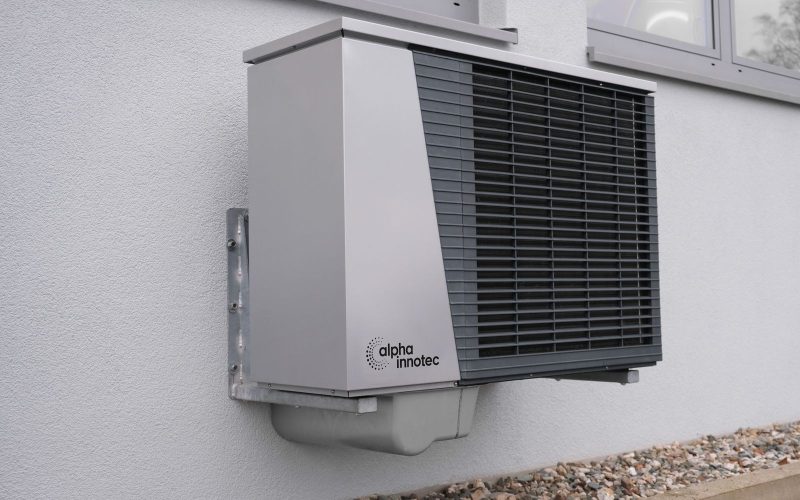
AURA series (SENA); LETO budget line
Best for: Budget buyers who can source their own licensed installer
Competent cold-weather ductless at roughly half the installed cost of a name brand, provided you can find a technician to install it.
Halcyon / Airstage XLTH series (RLS3H, RLXFWH, RLFFH, RLXFZH)
Best for: Cold-climate homes without ductwork that want heat pump heating without fossil backup
The most credible alternative to Mitsubishi Hyper-Heating, with documented full capacity at 3°F and slim-duct options that hide the hardware.
Hyper-Heating H2i / H2i plus (MSZ-FS, MXZ, SVZ/PVA, intelli-HEAT)
Best for: Cold climates and homes without complete ductwork
The most dependable cold-climate heat pump platform sold in the U.S., provided you buy it through a Diamond Contractor and accept a…
Frequently asked questions
Yes, the refrigerant work is designed for it. The Quick Connect line sets ship pre-charged and pre-flared with self-sealing couplings, so no vacuum pump, manifold gauges or EPA Section 608 certification is needed. You still need to drill a wall penetration, mount the units, run a condensate line and hire a licensed electrician for the dedicated circuit, disconnect box and permit.
The 5th Generation moved to R-454B, a low-GWP A2L refrigerant, while 4th Gen units use R-410A. The 5th Gen also rates slightly higher, up to 23.6 SEER2 versus roughly 22.7 on 4th Gen. Both use the same Quick Connect line set concept and the same warranty terms. Choose 5th Gen unless the 4th Gen discount is steep, because R-410A is being phased down and will get more expensive to service.
It depends on the size. MRCOOL's support documentation lists heating operation from about -13°F to 75°F for DIY models in the 12,000 through 24,000 BTU/h sizes, and 5°F to 75°F for the 36,000 BTU/h model. Note that an operating range is not a capacity rating: the compressor will run at those temperatures but output falls off, and MRCOOL does not publish capacity-at-5°F data. Plan backup heat in a cold climate.
5 years on parts and 7 years on the compressor, generally requiring registration and applying only to the original purchaser at the original installation address. Buying through an unauthorized reseller can void it entirely. Labor and refrigerant are not covered, so a covered compressor failure still means a service bill, assuming you can find a technician willing to work on a self-installed unit.
Slow leaks at the couplings are the most commonly discussed failure mode among owners, though field reports are broadly positive. The prevention is straightforward: tighten to the specified torque with a torque wrench rather than by feel, avoid over-tightening, support the line set so the couplings bear no weight, and leak-check the joints with soapy water after startup and again after the first season.
Usually not. The federal 25C tax credit was terminated for equipment placed in service after December 31, 2025, and most remaining state and utility rebate programs require installation by a licensed contractor, which disqualifies self-installers. Some DIY models are ENERGY STAR certified, which is a program prerequisite but not sufficient on its own. Read your specific program's rules before assuming a rebate applies.
Sources

Heat Pump Reviews Editorial Team
Our editors research heat pumps full time: manufacturer specifications, AHRI and ENERGY STAR listings, published cold-climate performance data, warranty terms, installer feedback and owner reviews. We do not accept payment for placement, and every rating follows our published methodology.