Air-to-Water Heat Pumps Explained: Radiant Floors, Radiators and Whether One Fits Your Home
An air-to-water heat pump heats water instead of air, making it a natural boiler replacement for radiant floors and hydronic homes. How they work, why water temperature decides the fit, and what to ask an installer.

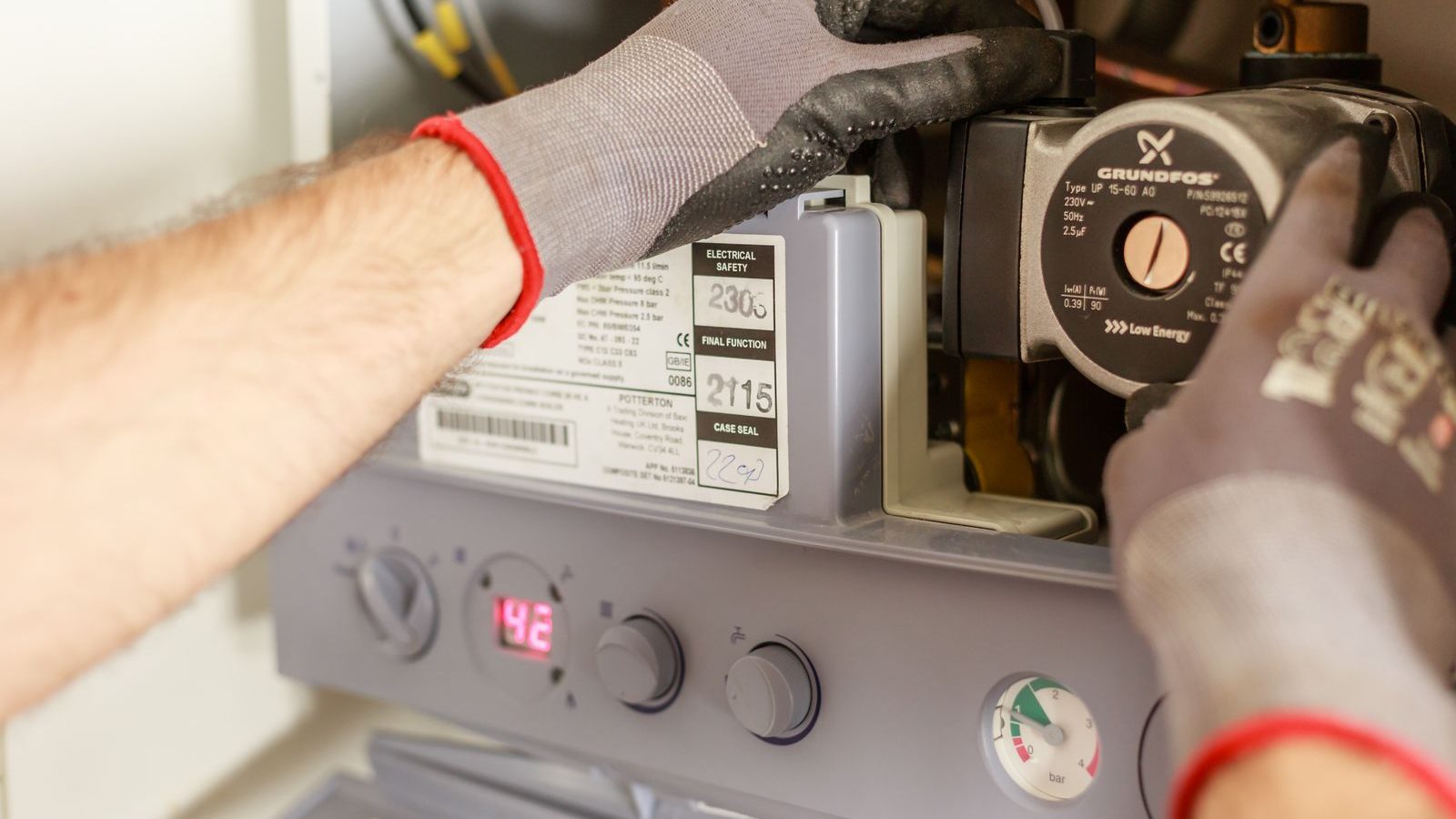
A heat pump that heats water instead of air, made for radiant floors and hydronic homes
Most US heat pumps blow warm air through ducts or a wall unit. An air-to-water heat pump does something different. It heats water and sends it through radiant floor tubing, fan coils or radiators, the way a boiler does, but without burning anything. It’s a great match for some homes and a poor one for others. The deciding factor is almost always water temperature.
An air-to-water heat pump pulls heat from outdoor air and puts it into a water loop instead of a stream of air. It works best with radiant floors and other low-temperature emitters, and it can also cool with the right indoor equipment and help make domestic hot water.
If your home has old radiators designed for very hot boiler water, you’ll need a careful heat loss calculation. At heat pump temperatures, those radiators can put out much less heat than they’re rated for. 💡
In much of Europe, air-to-water heat pumps are the standard way to replace a gas boiler. In the US, they’re still a niche product. Most American homes heat with forced air, so most American heat pumps are air-to-air systems that blow warm air through ducts or from wall-mounted heads.
But millions of US homes have hydronic heat: a boiler feeding radiant floors, baseboard fin-tube or cast-iron radiators. For those homes, and for new builds designed around radiant floors, an air-to-water heat pump can make a lot of sense. It keeps the quiet, even warmth people love about hydronic heat, and swaps the boiler’s flame for a much more efficient heat pump.
This guide explains how they work, which homes they suit, the water temperature question that decides most projects, and what to expect from the US market.
What’s in this guide
- How an air-to-water heat pump works
- Water temperature: the number that decides everything
- Radiant floors, fan coils and radiators compared
- Monobloc vs. split systems
- Cooling and domestic hot water
- Which homes it suits, and which it doesn’t
- The US market and finding an installer
- 6 mistakes with air-to-water systems
- Frequently asked questions
- Your final checklist
Alt text: “Air-to-water heat pump connected to a buffer tank and hydronic manifold in a basement”
How an air-to-water heat pump works
The outdoor unit works like any other heat pump. A fan pulls outdoor air across a coil, refrigerant absorbs heat from that air (even cold air has heat in it), and a compressor concentrates the heat. Our guide to how heat pumps work explains the cycle.
The difference is where the heat goes. Instead of warming air that blows into your rooms, the heat pump passes its heat into water through a heat exchanger. That warm water is pumped through your home’s heating system, whether that’s tubing in the floor, fan coils or radiators, and comes back cooler to be heated again.
A typical system includes:
- The outdoor heat pump unit
- A heat exchanger, either inside the outdoor unit or in an indoor module
- Circulator pumps to move water through the loops
- A buffer tank in many designs, a small tank of water that smooths out demand so the heat pump doesn’t cycle on and off constantly, especially with several zones
- Controls, often with outdoor reset, which automatically lowers water temperature on milder days
- Emitters: the radiant tubing, fan coils or radiators that actually warm the rooms
Because it replaces a boiler rather than a furnace, the natural comparison is a gas or oil boiler. An air-to-water heat pump has no flame, no flue and no combustion safety concerns. It can often cool, which a boiler can’t.
Some homes keep an existing boiler for backup or the coldest days while an air-to-water heat pump carries most of the load. Ask whether a hybrid setup makes sense for yours.
Water temperature: the number that decides everything
If you remember one thing from this guide, make it this: air-to-water heat pumps love low water temperatures.
Every heat pump works harder, and less efficiently, the bigger the gap between the outdoor temperature and the temperature it’s making. Making 90°F water on a cold day is much easier for a heat pump than making 140°F water. So the lower the water temperature your house needs, the cheaper the heat pump is to run.
Here’s where the trouble starts. Traditional boiler systems were often designed around very hot water. Chiltrix, a US air-to-water heat pump maker, notes that radiators are commonly designed for 160–180°F water. Air-to-water heat pumps generally deliver much cooler water. SpacePak lists its Solstice air-to-water models as delivering water from 42°F to 130°F.
That gap matters. According to Chiltrix, at a 105°F supply temperature, a radiator’s output can drop to around 37 percent of its original rating. Some higher-temperature models can reach around 140°F, but efficiency falls as temperature rises.
Many older hydronic systems were heavily oversized, just like old furnaces. Chiltrix points out that radiators that only ran 30 to 40 percent of the time may keep the house warm at lower water temperatures simply by running longer. The only way to know is a room-by-room heat loss calculation compared with each radiator’s output at heat pump temperatures.
With an air-to-water heat pump, the question isn’t “what does my house need?” It’s “at what water temperature does my house get what it needs?”
— The design question that decides most projects
Radiant floors, fan coils and radiators compared
The “emitter” is the part that delivers heat to the room. How well each type works with a heat pump comes down to how much surface area it has to release heat at lower water temperatures.
| Emitter | Heat pump fit | Why | Can it cool? |
|---|---|---|---|
| Radiant floor (in slab or under floor) | Excellent | Huge surface area; works with low water temps | Limited, with dew point control |
| Fan coils | Very good | A fan boosts heat output at lower water temps | Yes, with a condensate drain |
| Low-temperature panel radiators | Good | Designed for lower water temperatures | Generally no |
| Cast-iron radiators | Depends | Big and heavy; can work if oversized for the room | No |
| Baseboard fin-tube | Often challenging | Designed for hot water; output drops a lot at low temps | No |
Radiant floors are the ideal match. Chiltrix describes its systems as “highly compatible” with hydronic floor heating. Radiant floors spread gentle heat over the whole floor area, so they need only modestly warm water. That’s exactly what heat pumps do most efficiently.
Fan coils are the flexible option. They’re small units with a coil and a fan, mounted on a wall, in a ceiling or in a cabinet. The fan pushes more heat out of cooler water, and with a drain they can cool and dehumidify too.
Baseboard fin-tube is the hardest case. It’s common in older US homes, and it was usually sized for hot boiler water. It often needs extra length, supplementary emitters or some fan coils to work well with a heat pump.
Instead of replacing every emitter, some designs add a fan coil or two in the rooms that need the most heat and leave the rest as they are.
Alt text: “PEX radiant floor heating tubing installed over insulation, ideal for an air-to-water heat pump”
Monobloc vs. split systems
Air-to-water heat pumps come in two basic designs.
Monobloc. Everything refrigerant-related is sealed inside the outdoor unit. Only water pipes run into the house. That keeps refrigerant work simple. The trade-off is that water is flowing outdoors, so the system needs freeze protection. That’s often an antifreeze (glycol) mix in the loop, or other protection strategies, and it can slightly reduce efficiency and add maintenance.
Split. Refrigerant lines run from the outdoor unit to an indoor hydronic module, where heat passes into the water. Water stays inside the heated house, which reduces or avoids the need for glycol. SpacePak notes that its split design “provides the flexibility to reduce the use of glycol.” The trade-off is that a licensed technician has to install and charge the refrigerant lines, just like a mini-split.
| Factor | Monobloc | Split |
|---|---|---|
| Refrigerant work on site | Minimal; sealed at factory | Line set installed and charged on site |
| Freeze protection | Needed for outdoor water piping | Water stays indoors; less glycol |
| Installer skill set | Mostly hydronic/plumbing | Hydronic plus refrigeration |
| Good for | Short outdoor runs, simpler installs | Very cold climates, longer runs |
Split systems include refrigerant piping that must be installed, evacuated and charged by an EPA-certified technician. There’s no DIY version of that step.
Cooling and domestic hot water
Cooling. Many air-to-water heat pumps can run in reverse and make chilled water. How useful that is depends on your emitters. Fan coils can cool and dehumidify well, as long as they have condensate drains. Radiant floor cooling is possible but limited, because if the floor gets cooler than the dew point, moisture condenses on it. Chiltrix says radiant cooling needs a special dew point controller to prevent condensation. Radiators and baseboard can’t cool.
Domestic hot water. Many systems can also help heat your tap water through an indirect tank, a storage tank with a coil inside that the heat pump’s water flows through. SpacePak describes this as “domestic hot water offset,” and Chiltrix details specific coil sizing requirements for its indirect tanks. It’s worth asking about, especially if you’re replacing a boiler that also made your hot water. If you just want efficient hot water on its own, a standalone heat pump water heater is often simpler.
Chilled water in a floor can cause condensation, slippery floors and moisture damage if the controls don’t track the room’s dew point. If you want real summer cooling, plan on fan coils or a separate cooling system, and use radiant cooling only as a gentle supplement.
Which homes it suits, and which it doesn’t
| Your home | Fit | What to know |
|---|---|---|
| Existing radiant floors | Excellent | The ideal match; confirm design water temperature |
| New build designed for radiant | Excellent | Design for low water temps from day one |
| Boiler with oversized cast-iron radiators | Often good | Needs a heat loss vs. radiator output check |
| Boiler with baseboard fin-tube | Case by case | May need more emitters or fan coils |
| Forced-air home with ducts | Poor | An air-to-air ducted heat pump is simpler |
| No ducts, no hydronics | Usually poor | Ductless mini-splits are usually simpler and cheaper |
If your home has ducts, a conventional ducted heat pump is almost always the easier path. Our ducted vs. ductless guide covers those options. If you’re not sure a heat pump suits your home at all, start with our decision guide.
For cold climates, look at the rated heating capacity at low temperatures, not just the lowest operating temperature. SpacePak lists low-ambient heating down to −20°F or −22°F on some Solstice models, and Chiltrix says its units heat down to at least −13°F, with some models rated to −22°F. Capacity falls as it gets colder, so sizing matters. Our sizing guide explains the basics, and our cold-climate guide covers how to read low-temperature ratings.
The US market and finding an installer
This is the practical hurdle. Air-to-water heat pumps are much less common in the US than air-to-air systems, so there are fewer models to choose from and fewer installers with hands-on experience.
Brands you’ll see on US product lists include SpacePak, Chiltrix, Nordic and Arctic, among others. New York’s Clean Heat program even maintains a separate qualified product list for air-to-water heat pumps, which tells you state programs are starting to support them.
Finding the right installer matters more than the brand. You want someone who does hydronic heating regularly, not just a general HVAC contractor. Ask:
- How many air-to-water heat pump systems have you installed?
- Will you do a room-by-room heat loss calculation?
- What supply water temperature will my house need on the coldest design day?
- Will my existing emitters deliver enough heat at that temperature? If not, what will you add?
- Monobloc or split, and how will you handle freeze protection?
- Do you recommend a buffer tank, and why?
- How will outdoor reset controls be set up?
Costs vary widely because the hydronic work varies so much. A heat pump connected to existing radiant floors is a very different job from one that needs new emitters in every room. Get detailed, itemized quotes. Our heat pump cost guide covers the air-source systems you might compare against.
A quote designed around 110°F water and one designed around 140°F can’t be compared on price alone. The lower-temperature design may cost more upfront and much less to run.
The federal 25C tax credit ended for equipment placed in service after 2025. Some state and utility programs support air-to-water heat pumps, and some require models from a qualified product list. Check before choosing equipment. Our rebates guide explains where to look.
6 mistakes with air-to-water systems
❌ Mistake 1: Assuming old radiators will work at full output
Radiators rated for 180°F water deliver far less heat at heat pump temperatures.
❌ Mistake 2: Running water hotter than needed
Higher water temperatures feel like a safety margin but cut efficiency every hour of the winter.
❌ Mistake 3: Hiring an installer with no hydronic experience
A general HVAC contractor may know heat pumps but not pumps, buffer tanks, zoning and water chemistry.
❌ Mistake 4: Ignoring freeze protection on monobloc units
Water in outdoor piping can freeze during a power outage or fault.
❌ Mistake 5: Expecting radiant floors to cool like AC
Radiant cooling is limited by condensation and can’t dehumidify.
❌ Mistake 6: Choosing air-to-water for a ducted house
It’s a hydronic solution. In a forced-air home, it adds complexity for no benefit.
Frequently asked questions
What is an air-to-water heat pump?
It’s a heat pump that pulls heat from outdoor air and transfers it into water rather than air. The warm water runs through radiant floors, fan coils or radiators to heat your home. Many can also make chilled water for cooling and help heat domestic hot water.
Can an air-to-water heat pump replace my boiler?
Often, yes, especially with radiant floors or oversized radiators. The key question is whether your emitters can heat each room at the lower water temperatures a heat pump produces. A room-by-room heat loss calculation will tell you.
Will it work with my existing radiators?
It might. Radiators designed for 160–180°F water put out much less heat at heat pump temperatures. According to Chiltrix, output can drop to around 37 percent of the rating at 105°F. But many older systems are oversized, so some homes work fine. Others need extra or larger emitters.
Do air-to-water heat pumps work in cold climates?
Many do. Some US models are rated for heating down to −20°F or lower. Capacity and efficiency drop as it gets colder, so proper sizing and low water temperatures are important.
Can an air-to-water heat pump cool my house?
Many can make chilled water. Fan coils with condensate drains can cool and dehumidify well. Radiant floor cooling is limited by condensation and needs dew point controls. Radiators and baseboards can’t cool.
Why aren’t air-to-water heat pumps more common in the US?
Most US homes heat with forced air, so air-to-air heat pumps are a more natural fit. That means fewer air-to-water models and fewer experienced installers, though state programs, such as New York’s, have started listing qualified models.
Your final checklist
✅ Your air-to-water checklist
- Identify your emitters — radiant floor, fan coils, radiators or baseboard
- Get a room-by-room heat loss calculation — not a boiler-for-boiler swap
- Ask for the design water temperature — lower is better for efficiency
- Check emitter output at that temperature — room by room
- Choose monobloc or split — and confirm freeze protection
- Ask about a buffer tank — especially with multiple zones
- Set up outdoor reset controls — lower water temps on milder days
- Plan cooling realistically — fan coils for real cooling
- Consider domestic hot water — indirect tank or a separate HPWH
- Hire hydronic experience — ask how many air-to-water systems they’ve installed
- Check incentives and qualified product lists — before choosing equipment
Curious how ground-source systems compare? Our guide to how geothermal heat pumps work covers water-to-water systems that draw heat from the ground. For efficiency ratings in general, see SEER2, HSPF2 and COP explained.
Sources

Heat Pump Reviews Editorial Team
Our editors research heat pumps full time: manufacturer specifications, AHRI and ENERGY STAR listings, published cold-climate performance data, warranty terms, installer feedback and owner reviews. We do not accept payment for placement, and every rating follows our published methodology.